Quality Before Quantity: When More Training Stops Being Better
More reps, weight, and workouts don't automatically create more fitness. Learn why productive training depends on the quality and purpose of the work.
By
October 5, 2026

There are a lot of ways to do more in the gym. You can add weight to the bar, squeeze in another set, do a few extra reps after class, train another day, or turn the accessory work into a second workout because apparently the first one wasn't enough.
Sometimes more is exactly what we need. As we become fitter, the amount of work we can handle has to increase at some point if we want to keep improving. The mistake is assuming that adding work automatically makes the training better.
It doesn't. What matters is whether the additional work is still doing something useful.
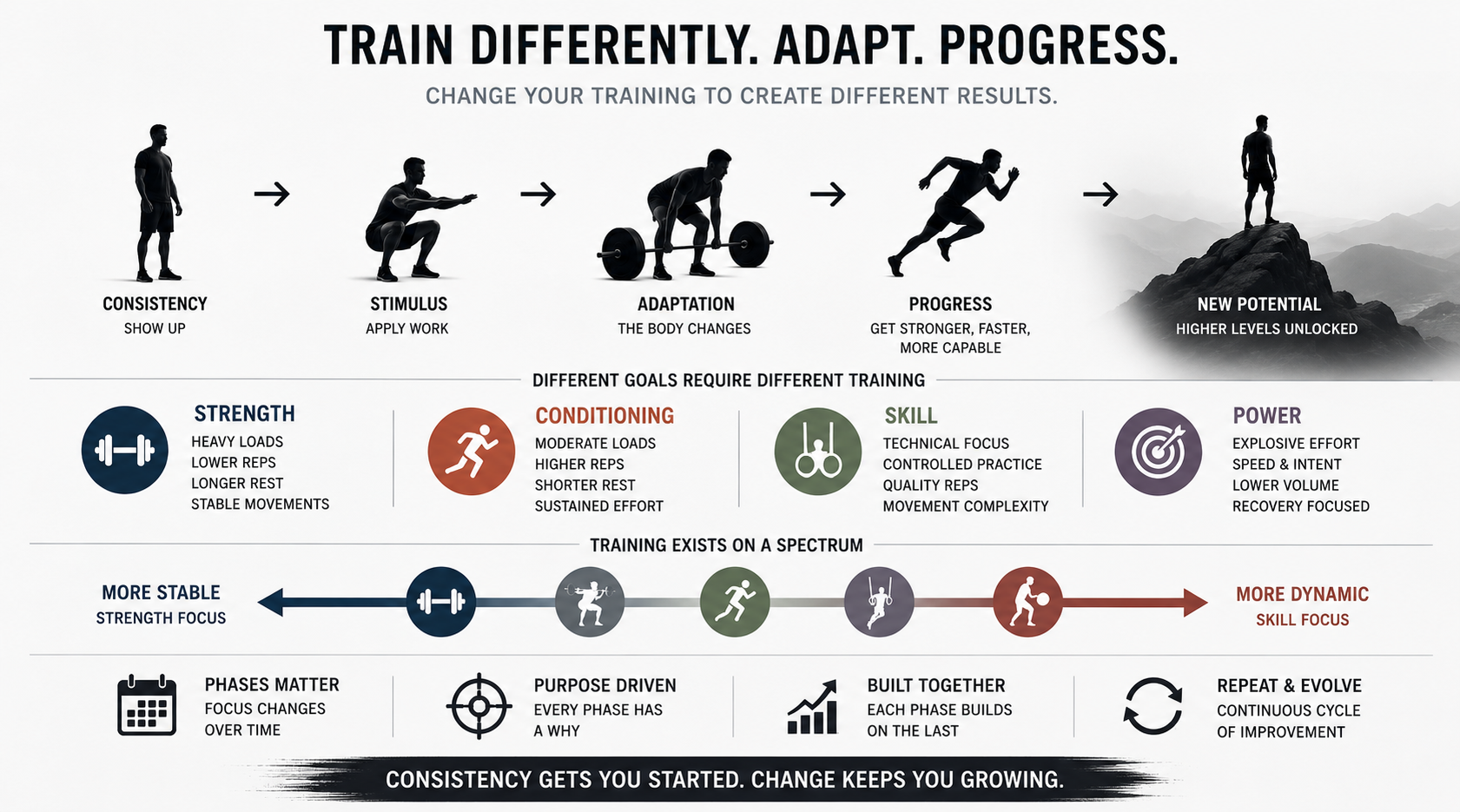
Training has to change as we adapt to it. If you've been squatting the same weight for the same sets and reps for years, there's a good chance your body stopped finding that particularly interesting a long time ago. We can increase the load, add reps or sets, increase range of motion, improve control, shorten rest, move faster, or make the movement more complex.
All of those can increase the demand. The important part is that the increase should have a reason behind it.
Volume is one of the variables we can manipulate. In strength training, that might mean accumulating more sets and reps. In conditioning, it might mean more rounds, greater distance, or spending longer at a particular pace. Enough volume gives us repeated exposure to something we're trying to improve.
But there's a point where adding another set mostly makes you more tired. Finding that point isn't always obvious, and it isn't the same for every person.
Imagine we're doing five sets of squats. Your first few sets are controlled, you're hitting the positions we're looking for, and the weight is moving the way it should. As fatigue builds, your depth starts changing, your torso position gets worse, and the last several reps look noticeably different from the first ones.
Technically, all of those reps count toward your training volume. They aren't necessarily giving you the same training value.
This doesn't mean every rep has to be perfect. Heavy training gets messy sometimes, and learning to maintain positions while you're tired is useful. There is a difference, though, between a rep being difficult and the movement becoming something else entirely.
That's where coaching matters more than the number written on the board. If the assignment says five sets, that doesn't mean finishing all five at the planned weight is automatically the right decision. Maybe we reduce the load. Maybe we take more rest. Maybe the fifth set isn't buying us much today.
On another day, you may feel great and your coach tells you to add weight. The program gives us the structure. What you're actually doing gives us the information we need to adjust it.
Quality is easier to picture with a barbell because we can see technique change, but conditioning has its own version of junk volume.
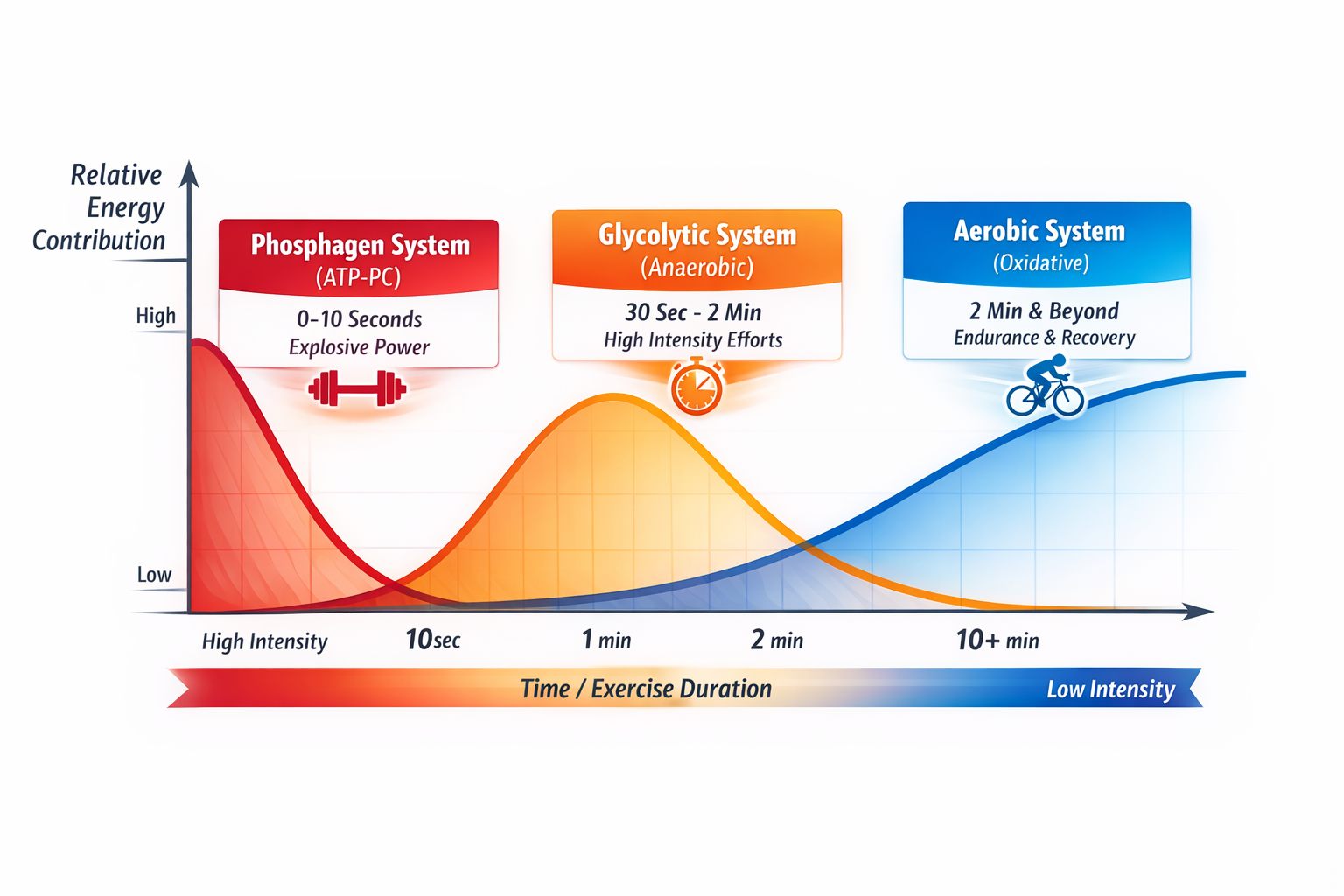
Suppose we're doing intervals where the goal is to repeat a reasonably high output. Your first few rounds are consistent, then your pace falls off dramatically. You can probably keep going, but we're no longer training quite the same thing we were at the beginning.
That doesn't mean slowing down is always bad. In a long workout, slowing down may be completely expected. The question is whether the change fits what we're trying to train.
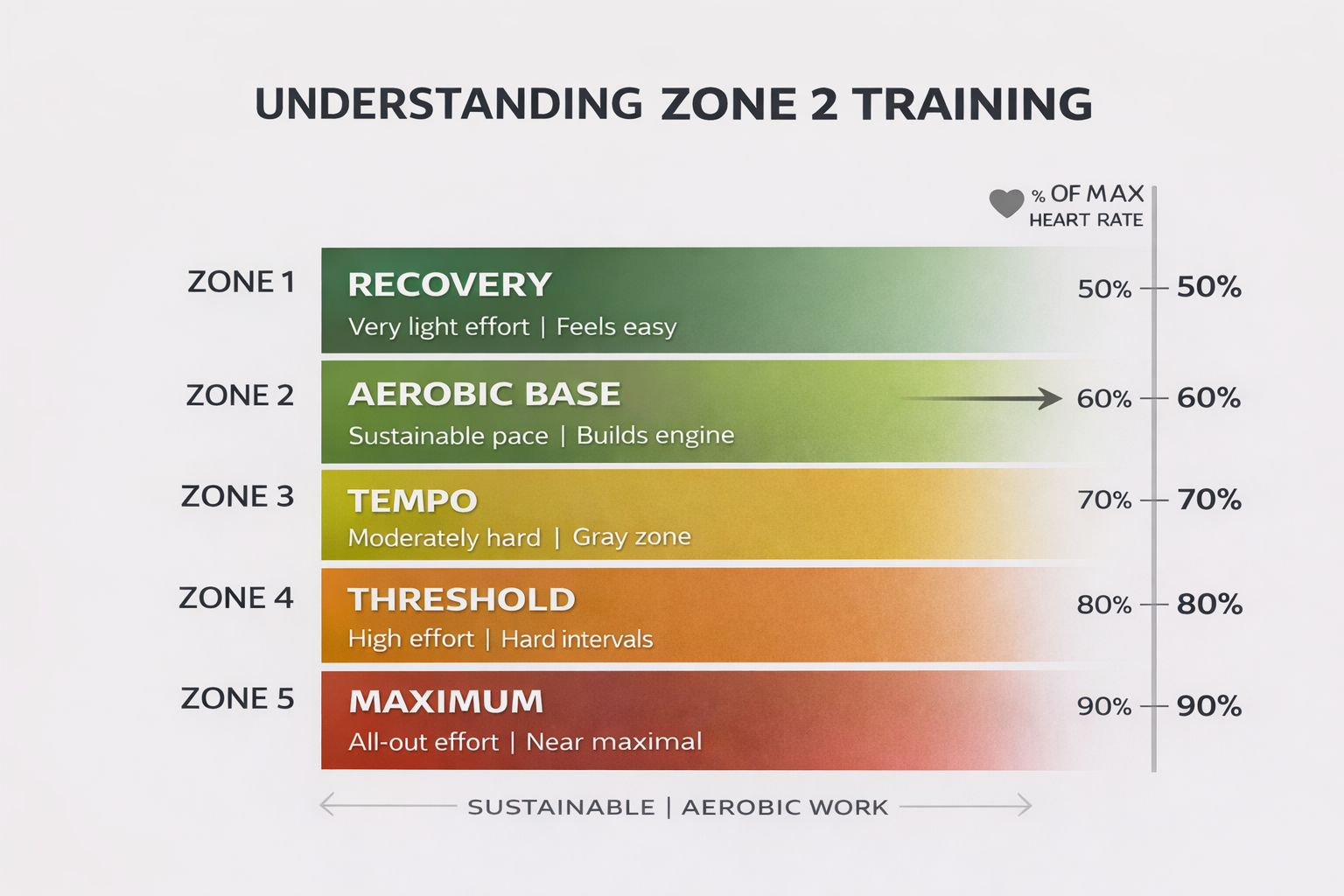
If the goal is thirty minutes of steady aerobic work, adding another ten minutes might be perfectly reasonable for someone who has built the capacity for it. Turning those thirty minutes into a race from the beginning because you want to get “more” out of it would probably make the session worse, not better.
The useful amount of work depends on what the work is for.
This comes up fairly often after class. Someone finishes the programmed training and asks what else they should do.
Sometimes there is a good answer. If you have a specific weakness, goal, or skill you're working on, some additional work can make sense. That's part of why accessory work exists in the first place.
But doing more simply because you still have time and energy isn't automatically useful. Extra work has to be recovered from just like the programmed work does. It also takes time and attention that could be spent on whatever we're actually trying to improve.
If you're working on pull-ups, fifteen focused minutes a couple of times each week may be much more useful than randomly adding fifty pull-ups whenever they appear in your head. If you want a stronger squat, consistently doing the planned squat work well is probably more important than finding another leg workout online that evening.
There's nothing particularly impressive about being able to make yourself tired twice in one day.
Progress isn't always visible as more.
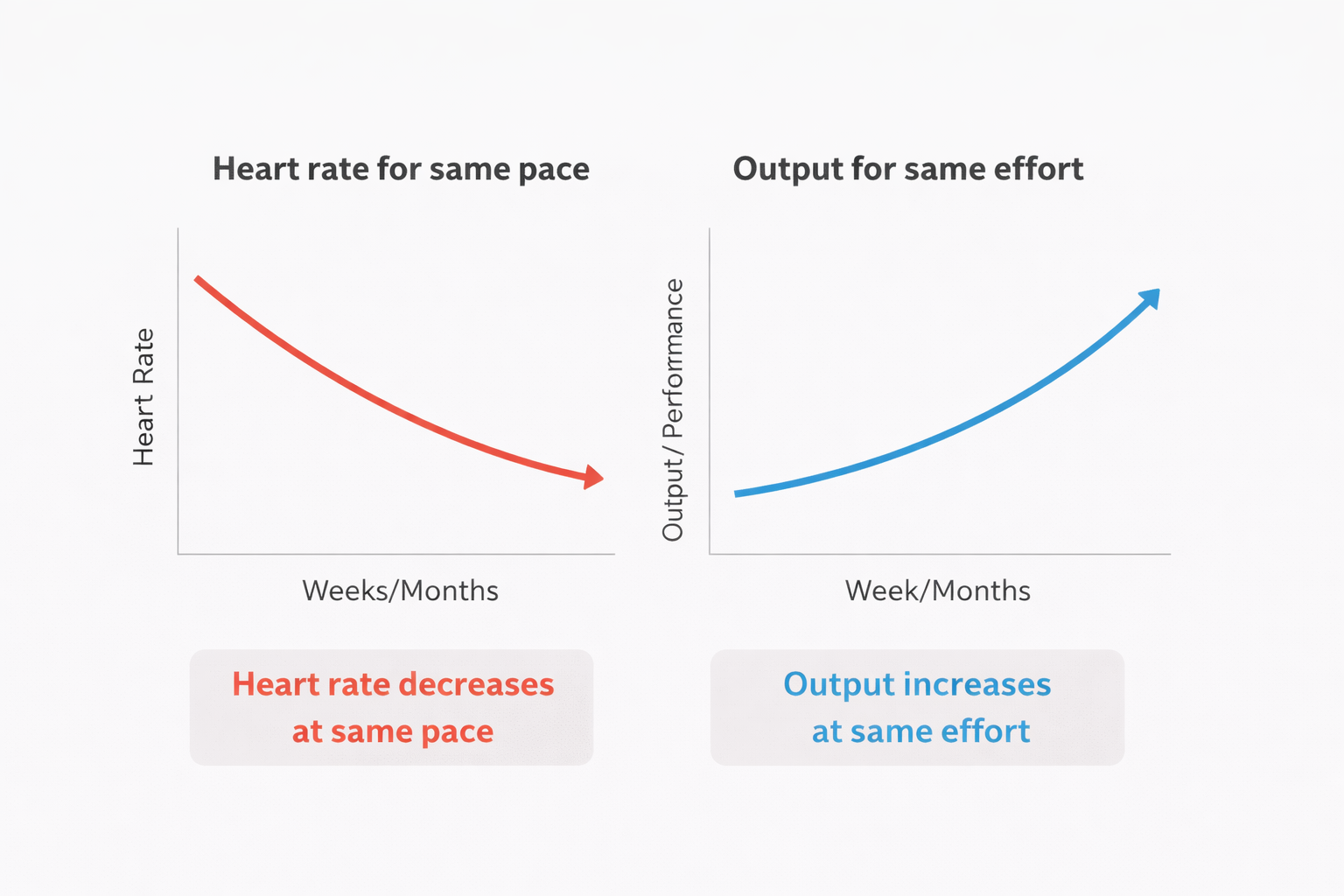
Take a set of eight squats with the same weight you used a few months ago. If you're moving through a better range of motion, maintaining better positions, controlling the descent, and finishing the set with less effort, something has changed even though the weight and rep count haven't.
The same thing can happen in a workout. You may repeat the same number of rounds but move more consistently, take fewer unnecessary breaks, or finish feeling like you paced the effort rather than barely surviving your opening pace.
Those changes matter because we're not just collecting repetitions. We're trying to become better at producing them.
This is particularly important with skill work. Ten thoughtful attempts at a movement can teach you more than thirty increasingly frustrated ones. Once fatigue has changed your timing and you're repeating the same mistake over and over, accumulating attempts isn't necessarily accumulating practice.
Sometimes the best thing a coach can tell you is that you're done for the day.
There's no universal number. A newer athlete can often improve with relatively little training because almost everything is still a meaningful stimulus. As someone becomes more experienced, it usually takes more specific work to keep producing change.
Your ability to recover matters too. Training doesn't happen in a vacuum. A volume of work that fits comfortably into one person's week may be too much for someone dealing with poor sleep, a stressful job, young kids, or four other hard training days.
This is part of why copying someone else's training can go sideways pretty quickly. You can see the work they're doing. You usually can't see all the training that built their tolerance for it, how they recover from it, or what else they aren't doing.
We'd rather earn increases in training than add them because more looks productive on paper. If you're recovering well, moving well, and the current workload isn't providing enough of a challenge anymore, we have room to increase it. If the quality of the work is already falling apart, adding more probably isn't the first problem we need to solve.
Over time, your capacity will grow. You should be able to lift more, tolerate more work, recover from more demanding sessions, and handle things that used to wipe you out. We just don't need to rush to the end of that process by piling work on before it has somewhere useful to go.