Maintaining Fitness: What Happens When Your Training Focus Changes
You don't have to train everything equally to maintain your fitness. Learn how strength, endurance, and skill respond when your training priorities change.
By
November 9, 2026

If you've spent several months working on your squat, it can feel strange when your training program suddenly includes less squatting. Maybe you were lifting heavy two or three times a week, and now you're doing it once while spending more time on conditioning or gymnastics. It's easy to wonder whether all that strength you worked so hard to build is quietly disappearing.
Fortunately, our bodies aren't quite that eager to give up everything we've accomplished.
Fitness requires consistent training to develop, but maintaining an ability generally takes less work than building it in the first place. That distinction allows us to shift our attention between strength, endurance, power, and skill without constantly starting over.
When we're trying to improve a particular ability, we need enough training to challenge our current capacity. Getting stronger requires progressively demanding resistance training. Improving endurance requires appropriate cardiovascular work, while developing technical skills takes repeated, focused practice.
Once we've developed those abilities, however, maintaining them doesn't always require the same amount of training.
For example, someone who spent months progressively increasing their squat might be able to maintain much of that strength with fewer weekly sets or sessions, provided the remaining work is challenging enough. The same principle applies to conditioning. We may be able to reduce the amount of dedicated endurance training while preserving much of the capacity we've developed.
That doesn't mean there's a universal minimum amount of work that guarantees maintenance. Training history, age, fitness level, intensity, and the length of the maintenance period all matter. But it does mean we have more flexibility than we might think.
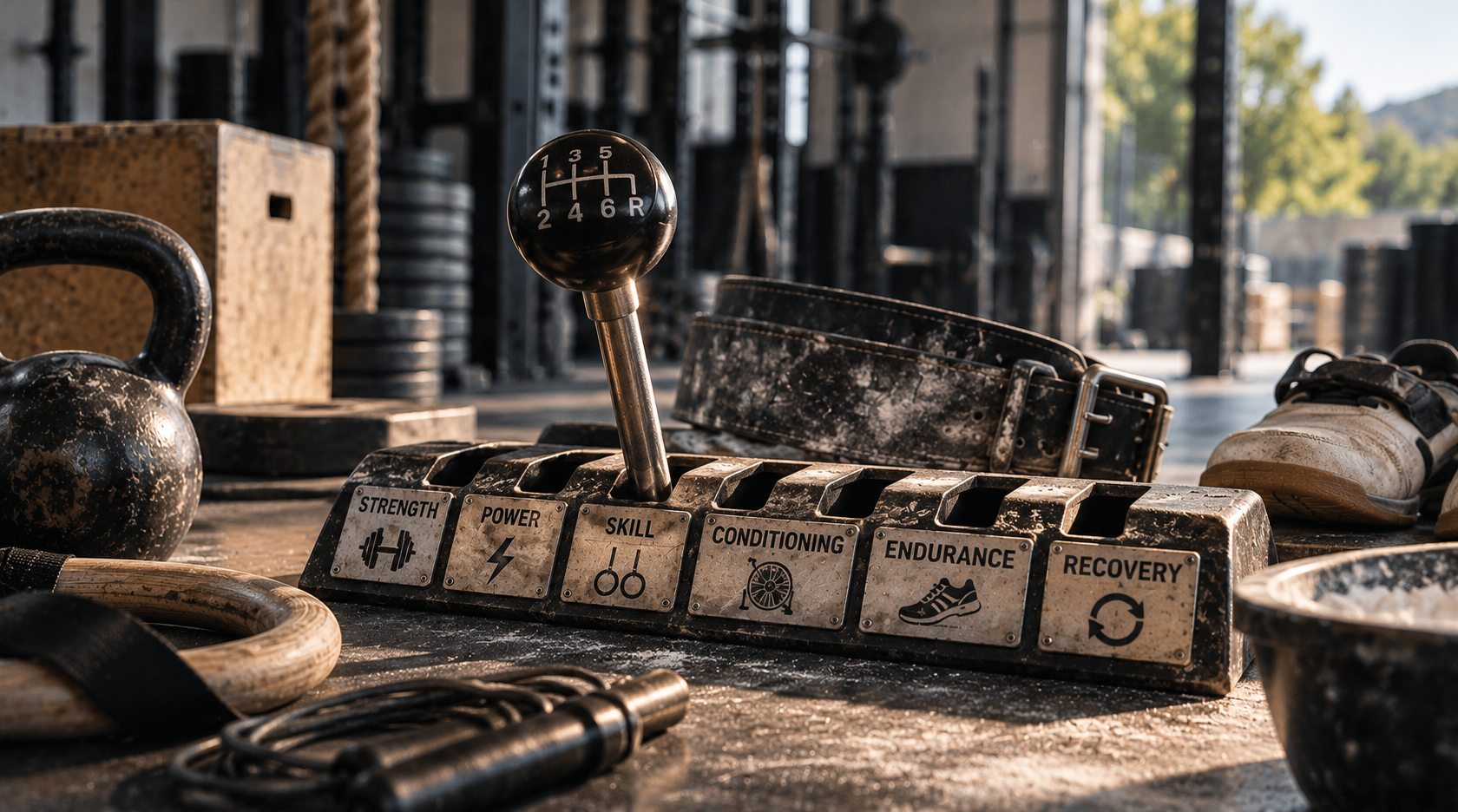
We have limited time and recovery capacity. Trying to maximize strength, endurance, power, mobility, and technical skill simultaneously would require considerably more training than most people can reasonably manage.
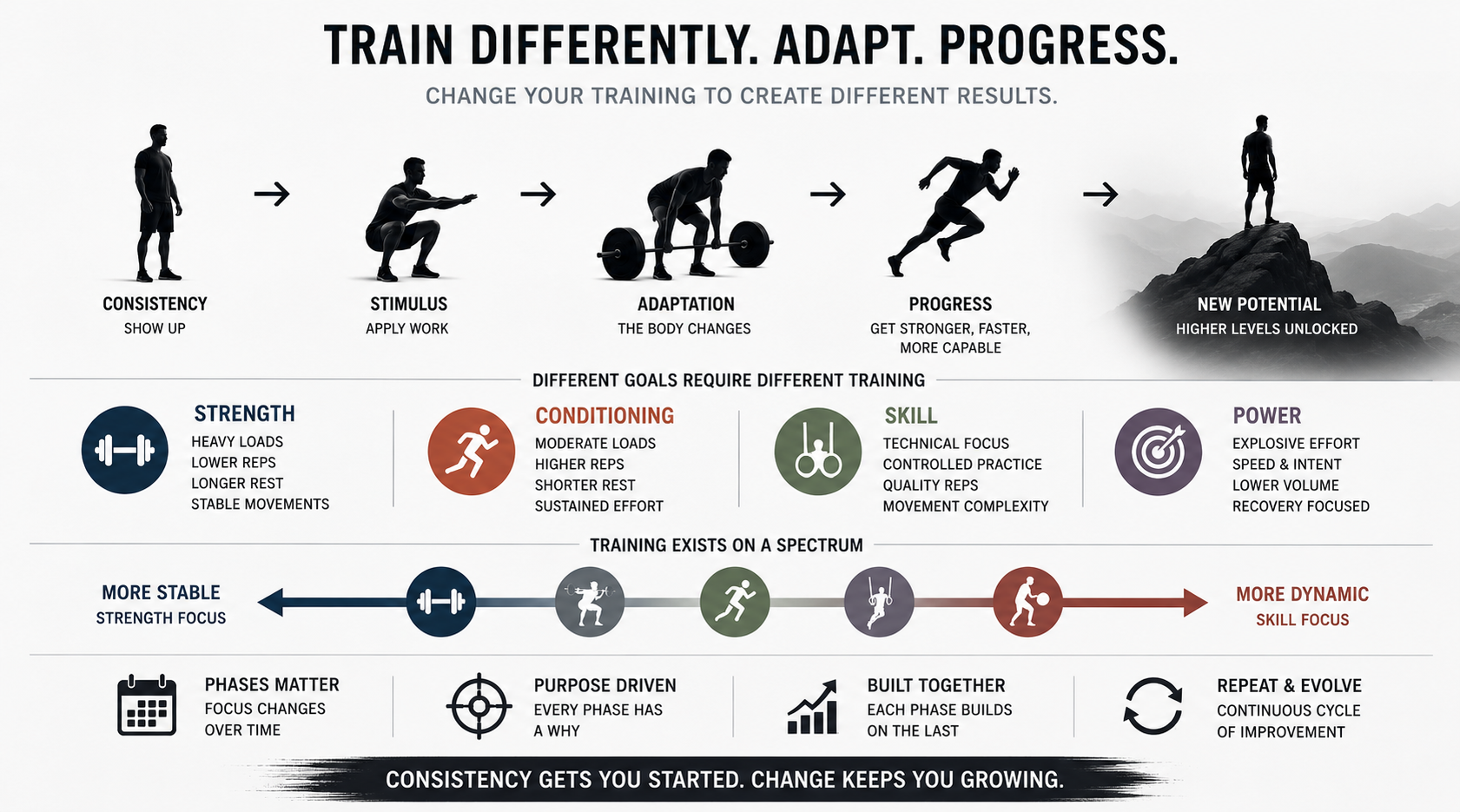
Instead, a well-organized program can spend periods of time developing particular abilities while maintaining others.
Consider someone who's spent several months emphasizing foundational strength. They might then shift toward more explosive movements, Olympic lifting, or gymnastics. Their training includes more practice developing speed and coordination, while heavier foundational lifts appear less frequently.
The strength work hasn't disappeared. It simply occupies a smaller portion of the program, leaving more time and energy available for something else.
Later, the emphasis might shift toward aerobic conditioning. Technical lifting remains part of the week, but there's more room for longer efforts and sustained work.
These changes allow different qualities to receive enough attention to improve without requiring every training session to accomplish everything.
Strength, endurance, and technical skill don't necessarily respond to reduced training in identical ways.
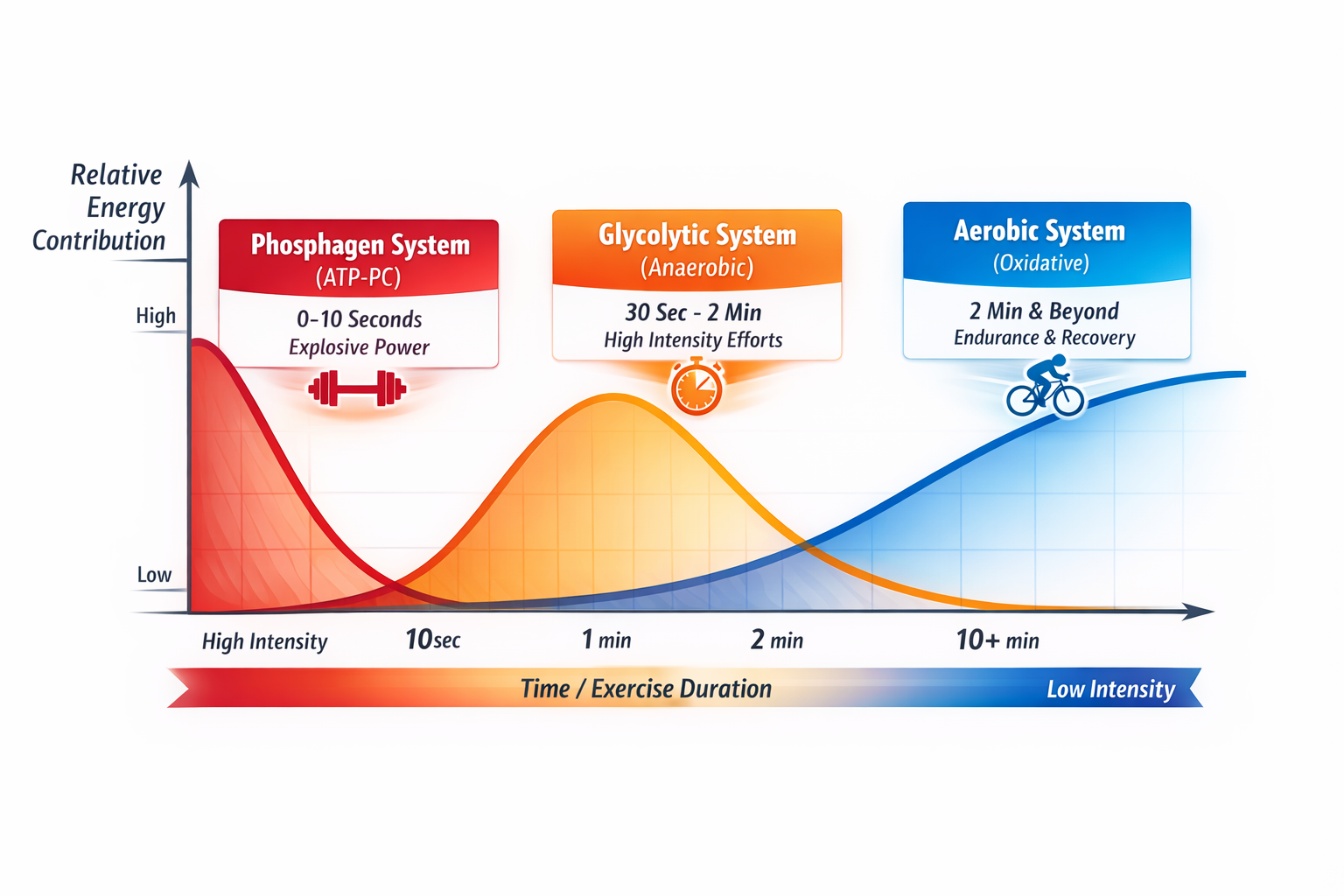
Strength can often be maintained for a meaningful period with less volume, particularly when we continue lifting sufficiently challenging loads. Aerobic fitness also responds well to reduced training under certain conditions, but completely removing endurance work will eventually affect our ability to sustain longer efforts.
Technical skills introduce another consideration. You might retain the strength needed for a clean or snatch but find that your timing feels a little rusty after several weeks without practicing the movement.
That doesn't necessarily mean you've lost the physical capacity to perform it. Coordination and confidence benefit from regular exposure, and it may take a few sessions to get comfortable again.
This is why maintaining fitness requires more thought than simply keeping a little bit of everything in the program. Different qualities need different amounts and types of attention.
There's an important distinction between reducing how much we train something and stopping completely.
If we remove a particular training demand for long enough, our bodies will eventually adapt to its absence. Strength can decline, endurance can decrease, and technical movements can become less consistent. How quickly that happens depends on the individual, the ability involved, and how much relevant activity remains in their routine.
But reducing the frequency or volume of training doesn't automatically produce the same result.
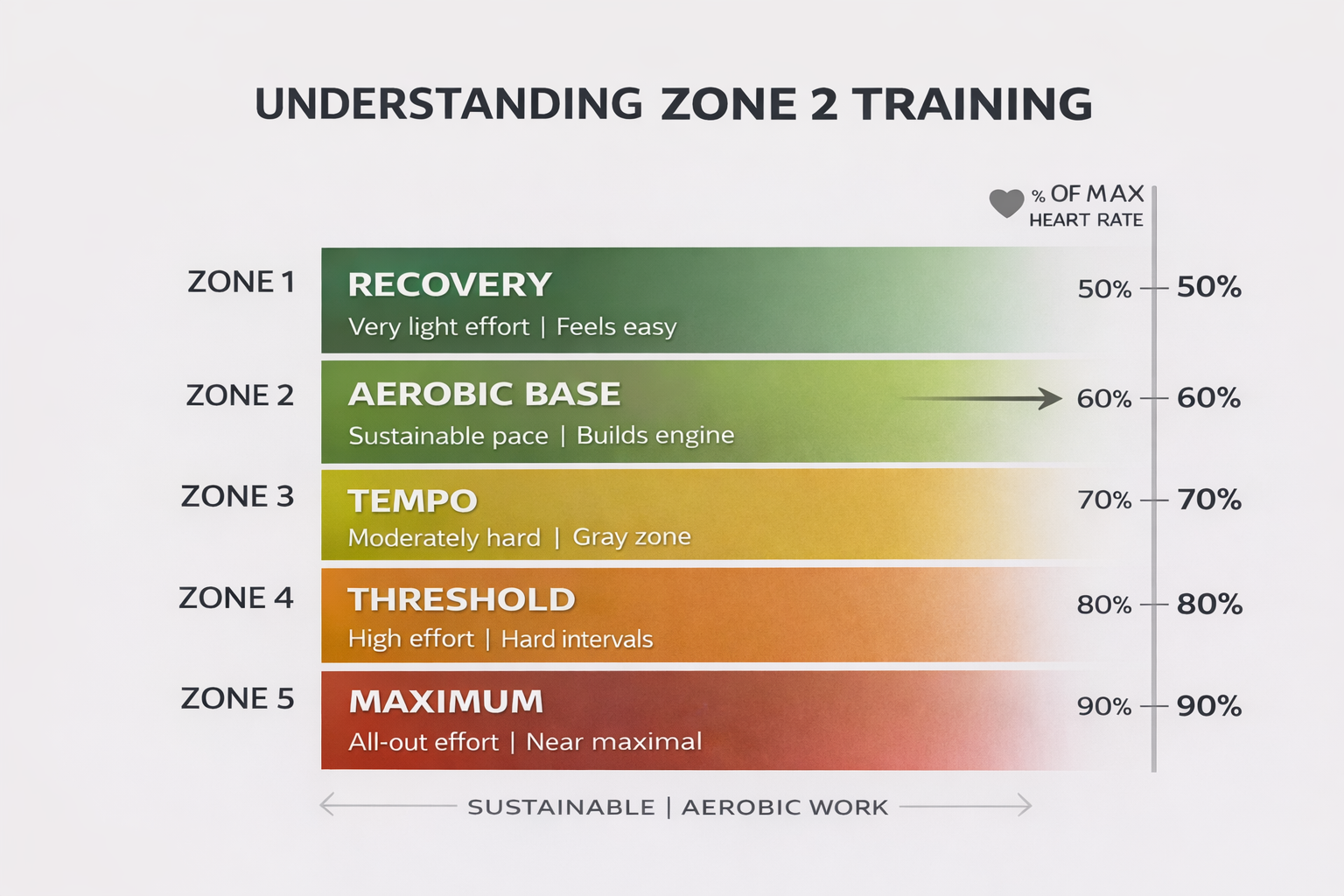
Someone who continues lifting heavy once a week may preserve much of the strength they developed during a more focused training period. Someone who maintains regular aerobic activity may retain a substantial portion of their conditioning even when longer endurance sessions become less frequent.
There's also a difference between losing some performance and losing the underlying adaptations. A lift that feels awkward after several weeks away might improve considerably once you've practiced it again. One disappointing session isn't enough evidence to conclude that months of training have been wasted.
One of the advantages of organized training is that we can periodically revisit the qualities we've emphasized previously.
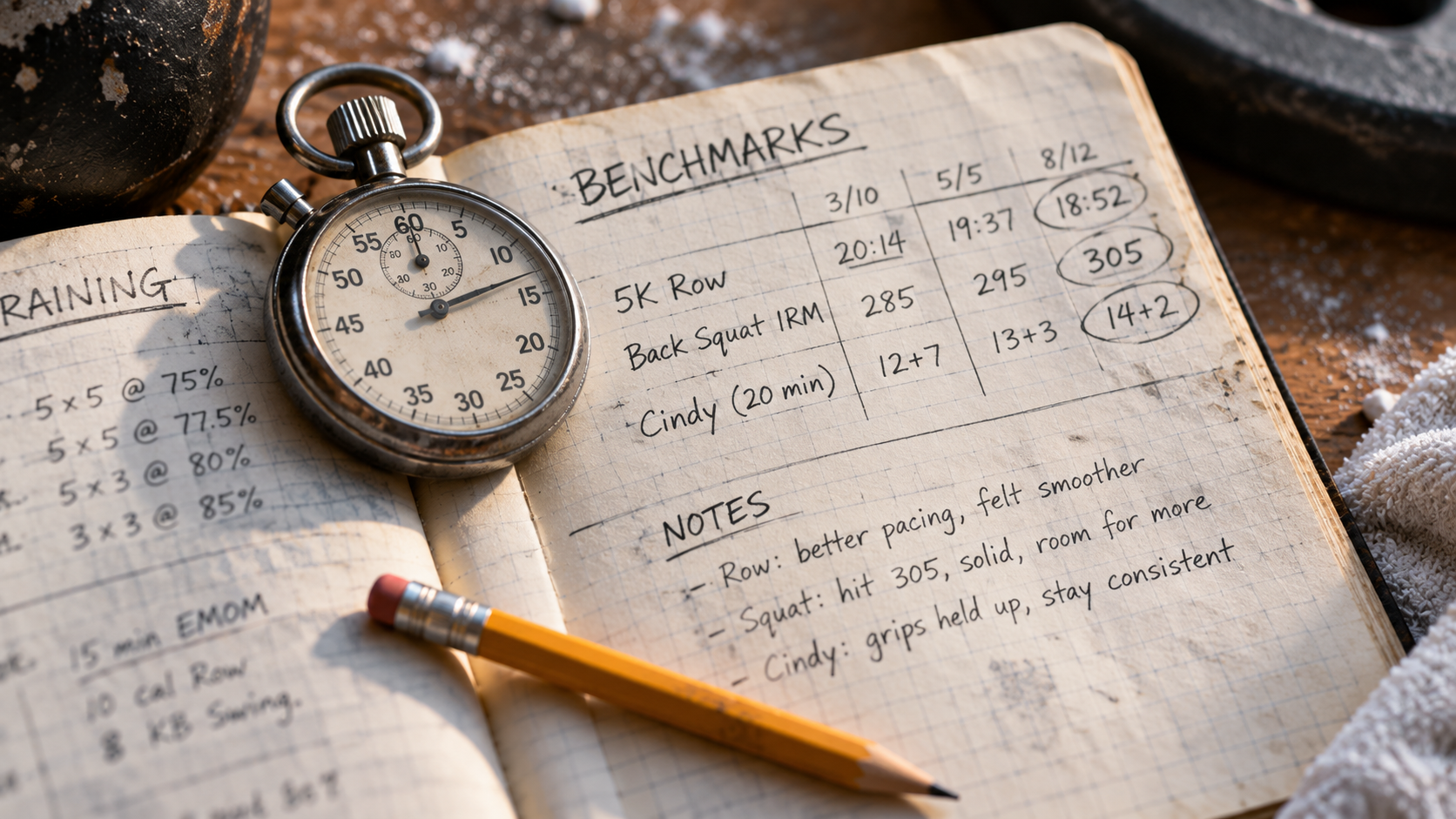
A familiar lift, workout, or benchmark gives us a useful reference point. If strength has remained relatively stable while conditioning improved, that may be exactly what the program was designed to accomplish.
If performance has declined more than expected, we can adjust the maintenance work. Perhaps a particular movement needs more frequent exposure, or the loads have become too light to provide enough stimulus. These are useful things to discuss with a coach who understands your training history and can distinguish a temporary off day from a developing pattern.
We also need to look at progress across longer periods. A small decrease in one area might be reasonable if it allows substantial improvement somewhere else, especially when that quality can be developed again later.
When your training changes direction, pay attention to what's receiving more emphasis and what is still being maintained. You may not be improving every ability at once, but you shouldn't need to rebuild your entire fitness every time the focus changes.