Sustainable Morning Routine
A sustainable morning routine helps athletes build consistency, reduce stress, and support long-term training progress without extreme habits.
By
February 27, 2026

Morning routines are often presented as extreme. Wake at 4 a.m. Cold plunge. Journal. Meditate. Train before sunrise. While discipline matters, most athletes do not need elaborate systems to make progress.
A sustainable morning routine is not about intensity. It is about repeatability. The goal is to start the day in a way that supports training, recovery, and decision-making without creating unnecessary pressure.
The most effective routines are simple enough to maintain during busy weeks.
A sustainable routine might include:
This does not require perfection. It requires predictability.
When mornings feel stable, training feels easier to prioritize.
Training quality is influenced by what happens in the first hour of the day.
Sleep inertia, hydration status, and mental focus all affect how an athlete approaches their session. A rushed or reactive start often carries into training as scattered focus or reduced effort.
A structured morning reduces friction. It lowers the number of decisions that compete with training later in the day.
Exposure to natural light shortly after waking helps regulate circadian rhythm. This improves alertness in the morning and supports better sleep at night.
Light movement in the morning, even brief mobility or walking, increases blood flow and joint readiness. It does not need to be intense. The goal is to signal that the body is transitioning into activity.
These small habits reinforce rhythm, and rhythm supports consistency.
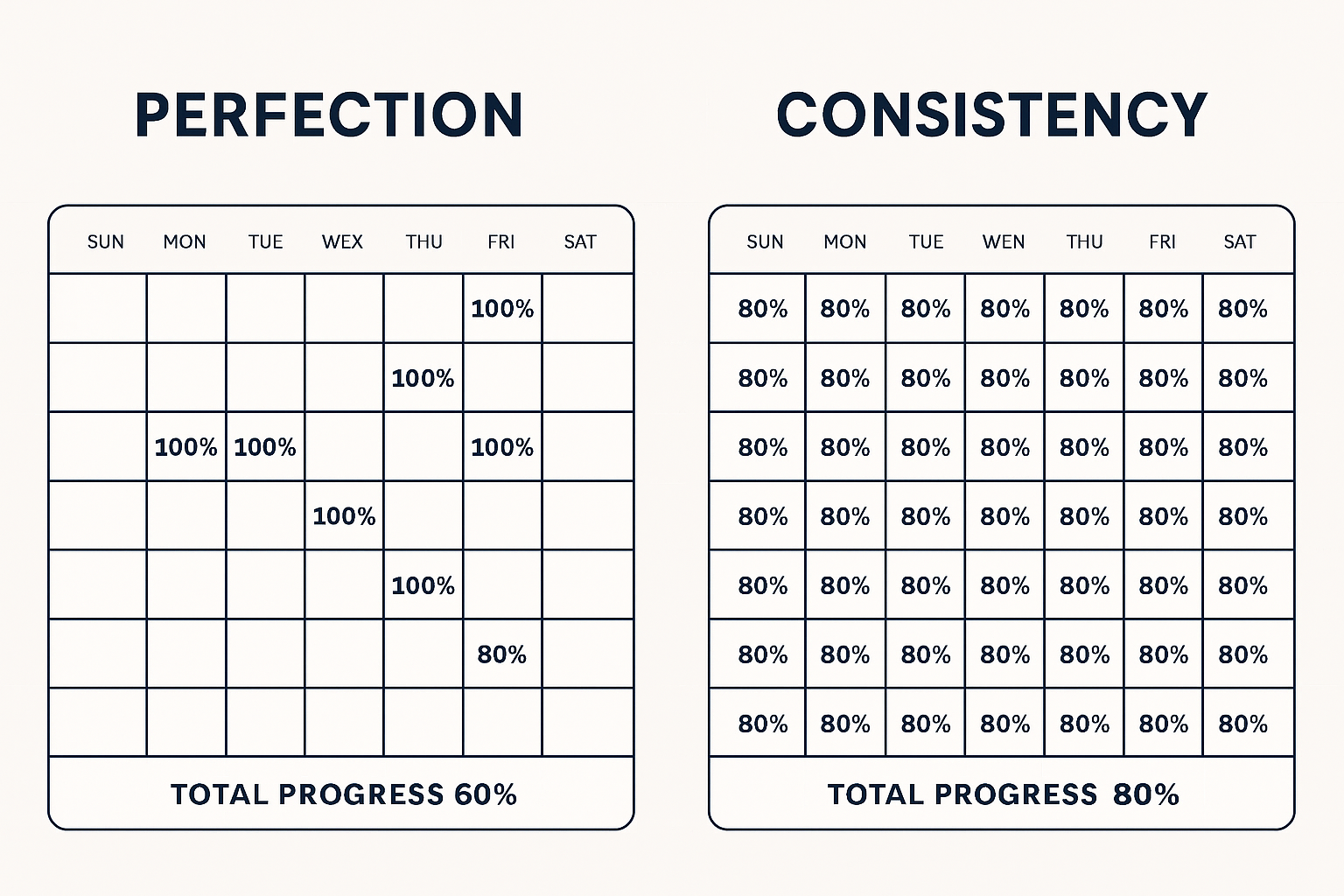
Many athletes abandon routines because they cannot execute them perfectly.
A sustainable approach allows flexibility. If travel disrupts sleep, maintain hydration and light movement. If mornings are compressed, keep one anchor habit rather than skipping everything.
Rigid routines fail under real-world stress. Adaptable routines survive it.
Morning routines should simplify life, not complicate it.
Preparing gym clothes the night before, pre-planning breakfast, or outlining training goals reduces decision fatigue. When energy is preserved early, it can be invested in training later.
Small environmental changes often produce greater results than adding more tasks.
Morning behavior reinforces identity.
Athletes who consistently show up for small habits build trust with themselves. That trust compounds into better adherence to training, nutrition, and recovery.
Identity grows through repetition, not intensity.
It is not:
It is a foundation that supports the rest of the day.
A sustainable morning routine does not need to be impressive. It needs to be repeatable. When athletes start the day with consistency, clarity, and small intentional actions, training becomes easier to execute and progress becomes more stable over time.