The Scoreboard Is a Tool, Not the Goal
Scores and benchmarks have value in training, but they are tools, not the purpose. Learn how to use the scoreboard without letting it define your progress.
By
February 7, 2026

How to use performance metrics without letting them dictate your training
Scores are not the enemy.
Times, loads, benchmarks, and leaderboards exist for a reason. They provide structure, context, and feedback. They can motivate effort and help athletes see progress over time.
Problems arise when the scoreboard becomes the goal rather than a tool.
When that happens, training decisions shift. Technique erodes. Recovery is compromised. Consistency suffers. What began as a useful reference point quietly starts steering the entire process.
Used correctly, scores offer valuable information.
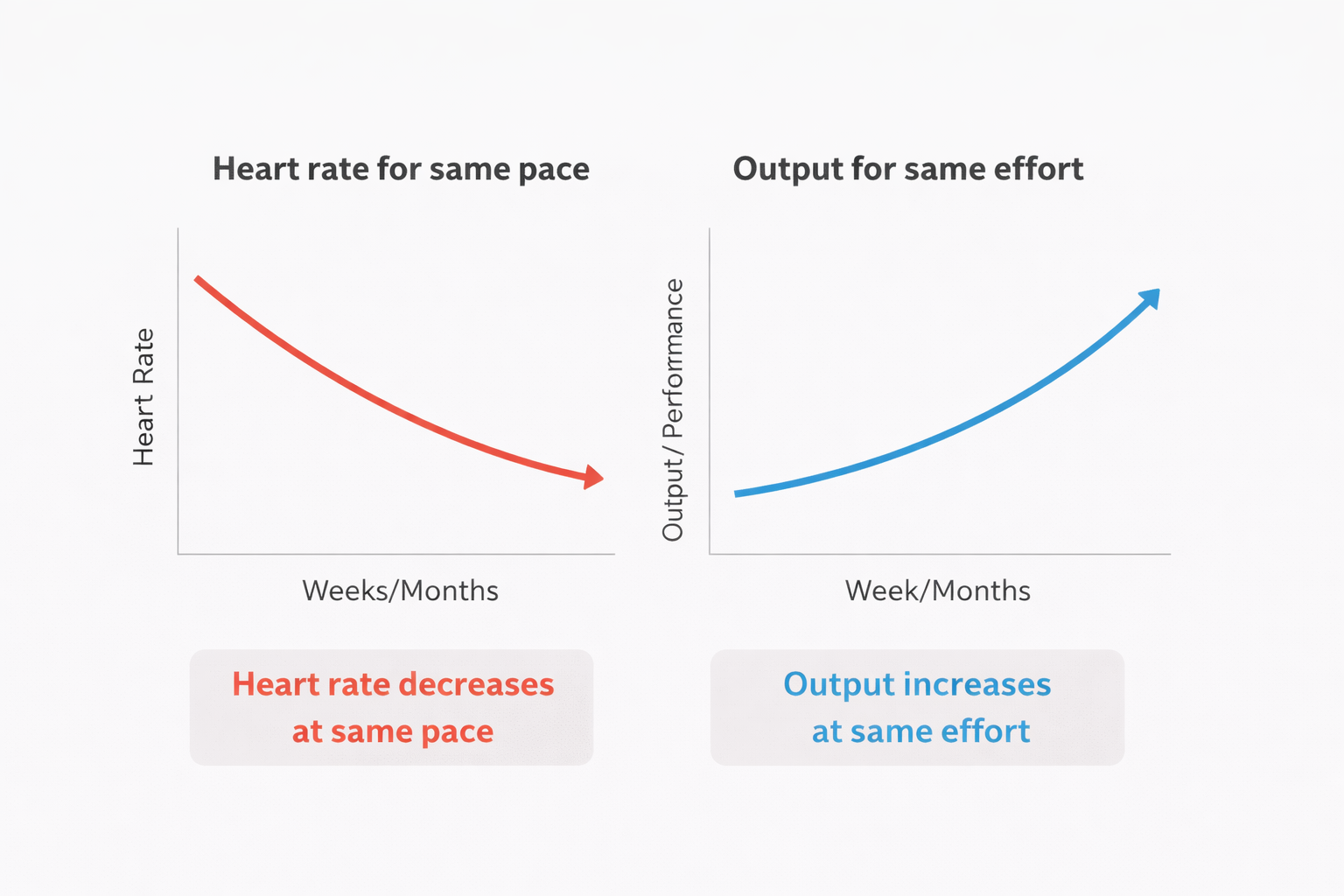
They can highlight trends, reveal improvements, and signal when training adaptations are occurring. Benchmarks help athletes test capacity, evaluate programming, and occasionally push beyond perceived limits.
Scores are most useful when they are observed, not chased.
They answer questions. They should not dictate behavior.
When athletes optimize every session for output, tradeoffs accumulate.
Technique is rushed to save seconds. Loads creep higher than can be controlled. Fatigue is ignored. Recovery debt builds.
Over time, this approach narrows training. Sessions become less repeatable. Injuries become more likely. Progress slows, even if occasional high scores still appear.
The cost is not always immediate, but it is consistent.
Training builds capacity. Testing reveals it.
When every session is treated like a test, training loses its purpose. Athletes stop practicing restraint, positions, and pacing. They stop accumulating the kind of volume and quality that produces long-term adaptation.
The scoreboard belongs in testing moments. Training should serve what comes next.
Performance matters, but it is not the only outcome that matters.
Athletes also train to feel capable in daily life. To move well under fatigue. To stay active across years, not just seasons. To hike, travel, work, and play without hesitation or constant breakdown.
When training is guided by long-term capacity rather than daily scores, these outcomes improve alongside performance.
Successful training sessions do not always produce standout numbers.
Many of the best sessions feel controlled, focused, and repeatable. They support tomorrow’s training instead of borrowing from it. They leave athletes challenged, not depleted.
In that context, the scoreboard becomes what it was meant to be: a reference point, not a ruler.
The scoreboard is not something to ignore or reject. It is something to use with intention. When athletes stop letting scores define success and start letting training quality lead the process, progress becomes more durable, more transferable, and easier to sustain. The goal is not to win every day. The goal is to keep building.