Why We Use Tempo and Control in Training
Tempo training improves strength, control, and movement quality. Learn why slowing down your reps can lead to better performance and long-term progress.
By
April 3, 2026
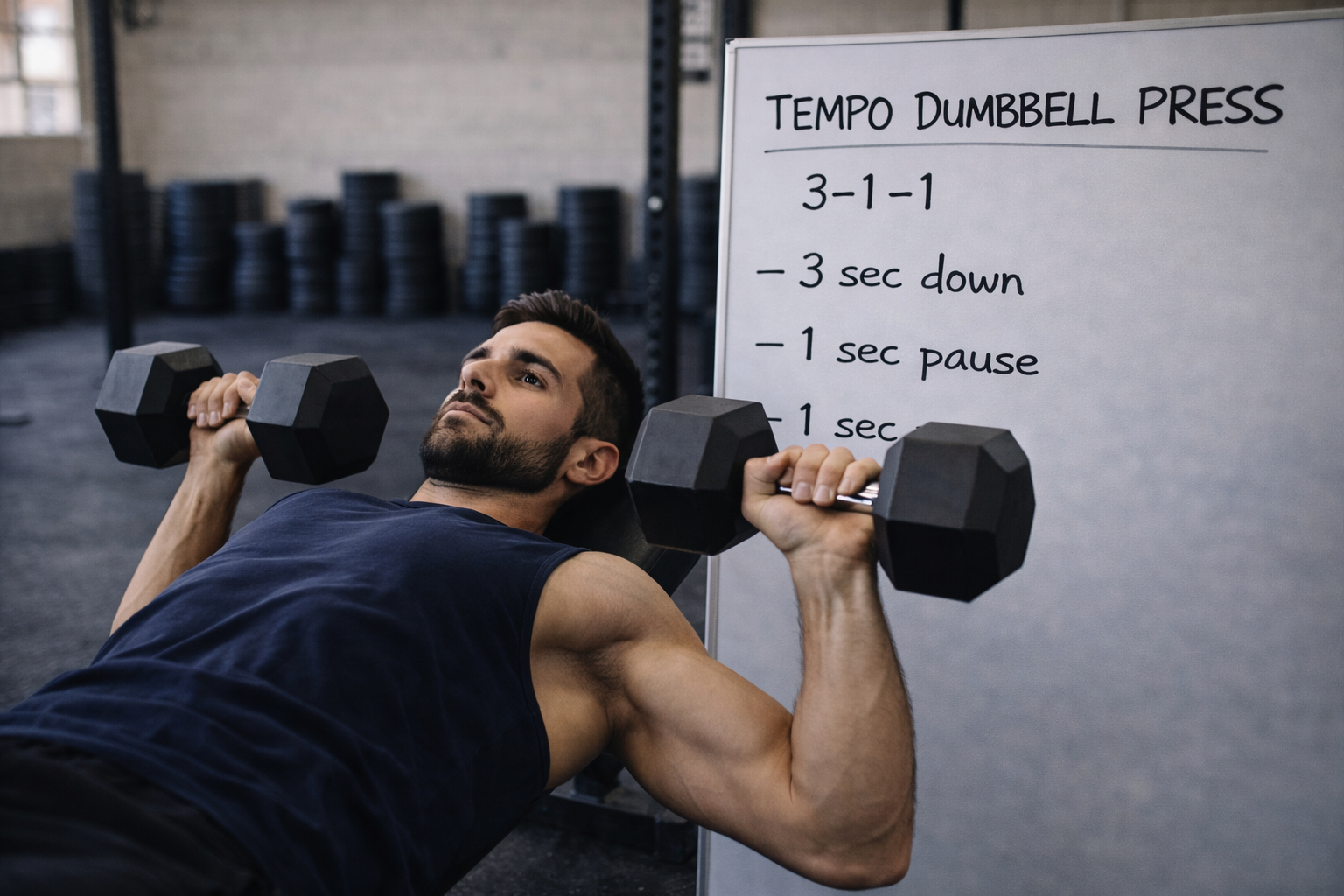
At first glance, slowing down a movement can feel counterproductive.
Most athletes are used to training fast, pushing intensity, and trying to complete workouts as quickly as possible. When tempo is introduced, everything changes. Reps take longer. Weights feel heavier. Fatigue builds differently.
This is intentional.
Tempo training is not about making workouts harder for the sake of it. It is about improving control, reinforcing positions, and building strength in a way that transfers to better performance.
Tempo refers to the speed at which each part of a movement is performed.
A tempo prescription might look like this:
3-2-X-1
This means:
Instead of rushing through reps, athletes are asked to control each phase of the movement.
This changes the stimulus completely.
When movements are performed quickly, it is easy to rely on momentum.
This can mask weaknesses and allow athletes to move weight without fully controlling it.
Slowing the movement removes that option.
Now the athlete must:
This builds real strength, not just the ability to move weight.
Strength is specific to position.
If an athlete is only strong in the easiest part of a lift, progress will stall. Weak positions will continue to limit performance.
Tempo training forces athletes to spend more time in these positions.
For example:
Over time, this builds strength where it is actually needed.
Technique often breaks down under speed and fatigue.
Tempo slows everything down enough for athletes to:
This is especially important in compound lifts and skill-based movements.
Better movement quality leads to:
Tempo training often feels harder even with lighter weights.
This is because:
This type of fatigue is different from high intensity or high speed work. It is more controlled and more targeted.
That is why lighter weights can still create a strong training effect.
Tempo is not used all the time. It is a tool.
It is often used:
By controlling tempo, coaches can adjust difficulty without always increasing weight.
This allows athletes to train effectively without accumulating unnecessary fatigue.
The most common mistake is ignoring the tempo.
Athletes may rush through reps or shorten the prescribed timing. This removes the intended stimulus.
Another mistake is going too heavy.
If the weight forces you to lose control, it defeats the purpose. Tempo work should prioritize quality over load.
Tempo training reinforces the idea that how you move matters just as much as how much you lift.
It shifts focus from:
This leads to better habits, better mechanics, and better long-term results.
Slowing down is not a step backward. It is a way to build a stronger foundation.
Athletes who learn to control movement develop strength that lasts, technique that holds up under fatigue, and performance that continues to improve over time.
Train with intention, not just intensity.