Why We Train Every Movement Pattern and Why It Matters
Training all major movement patterns improves strength, balance, and long-term performance. Learn why well-rounded programming matters and how it supports your progress.
By
May 13, 2026
It is easy to judge a workout by how it feels.
Was it hard?
Did it feel productive?
Did it hit the muscles you expected?
But effective training is not built around how a single session feels.
It is built around what is being trained over time.
At its core, a well-designed program is not just a collection of workouts. It is a system that ensures all major movement patterns are trained, reinforced, and developed.
That is what creates balanced, durable, and capable athletes.
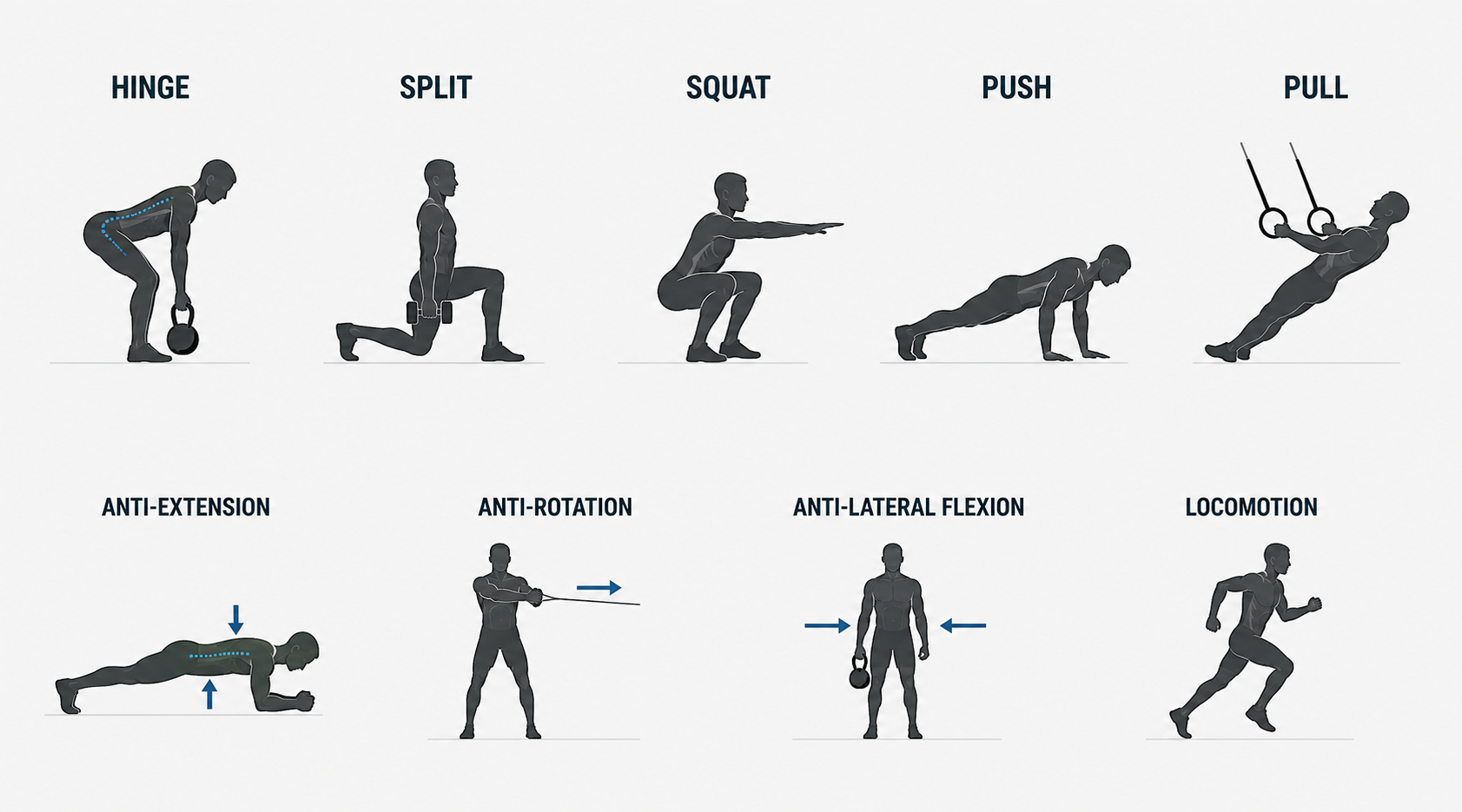
Movement patterns are the fundamental ways the body produces and controls force.
They are not exercises.
They are categories of movement that show up across:
Exercises are just expressions of these patterns.
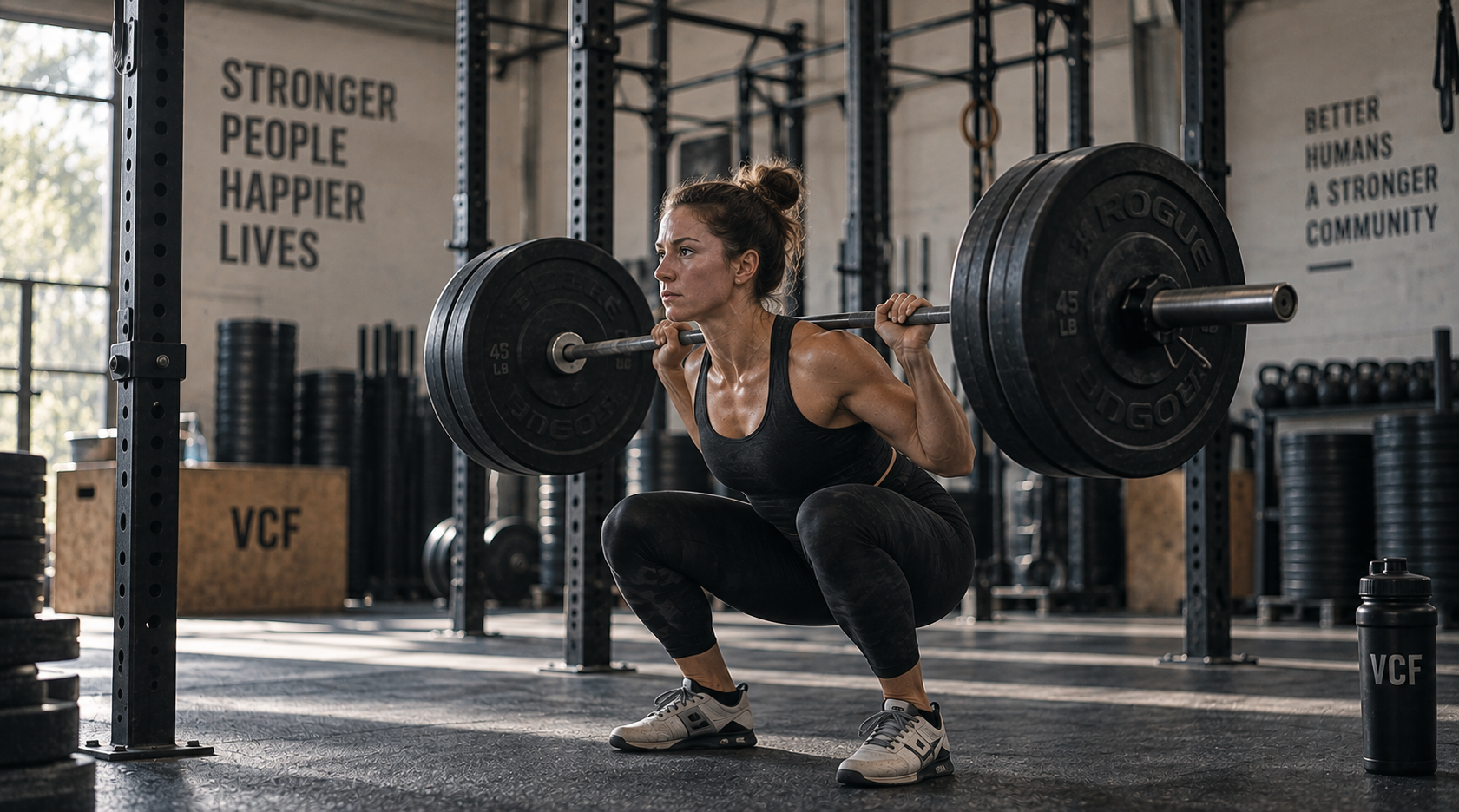
Squats, lunges, presses, and pulls are all tools. The patterns behind them are what matter.
When certain patterns are trained consistently while others are neglected, imbalance develops.
That imbalance can lead to:
Training all patterns ensures:
To simplify things, we can break movement into three primary areas:
Each has multiple expressions that need to be developed.
The midline is not just about abs.
It is about the ability to:
Without this, strength in the limbs does not transfer effectively.
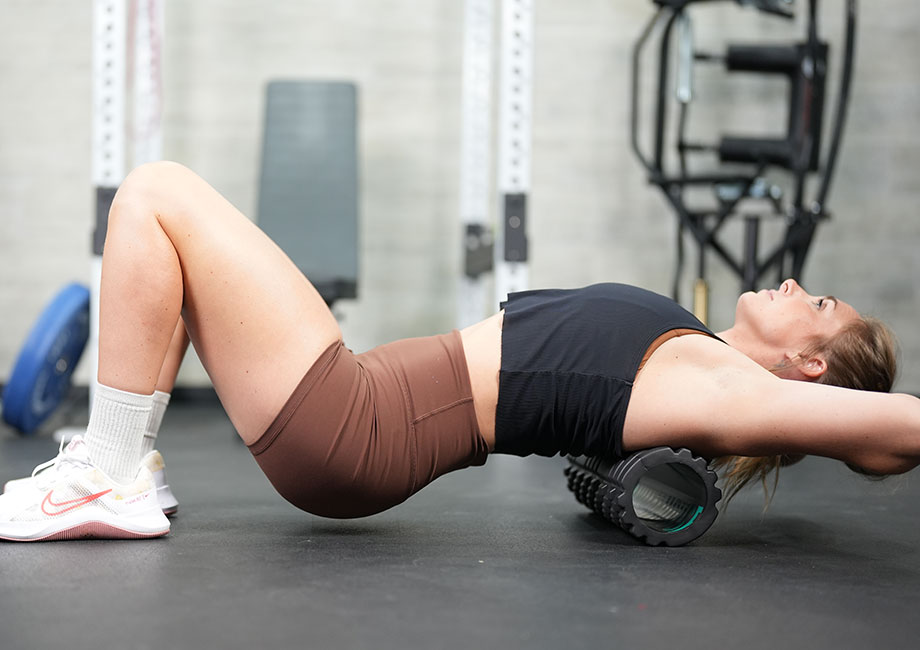
These are basic movement patterns of the spine.
Articulating (segmental movement):
Hinged (controlled, rigid torso):
These develop both movement and control through range.
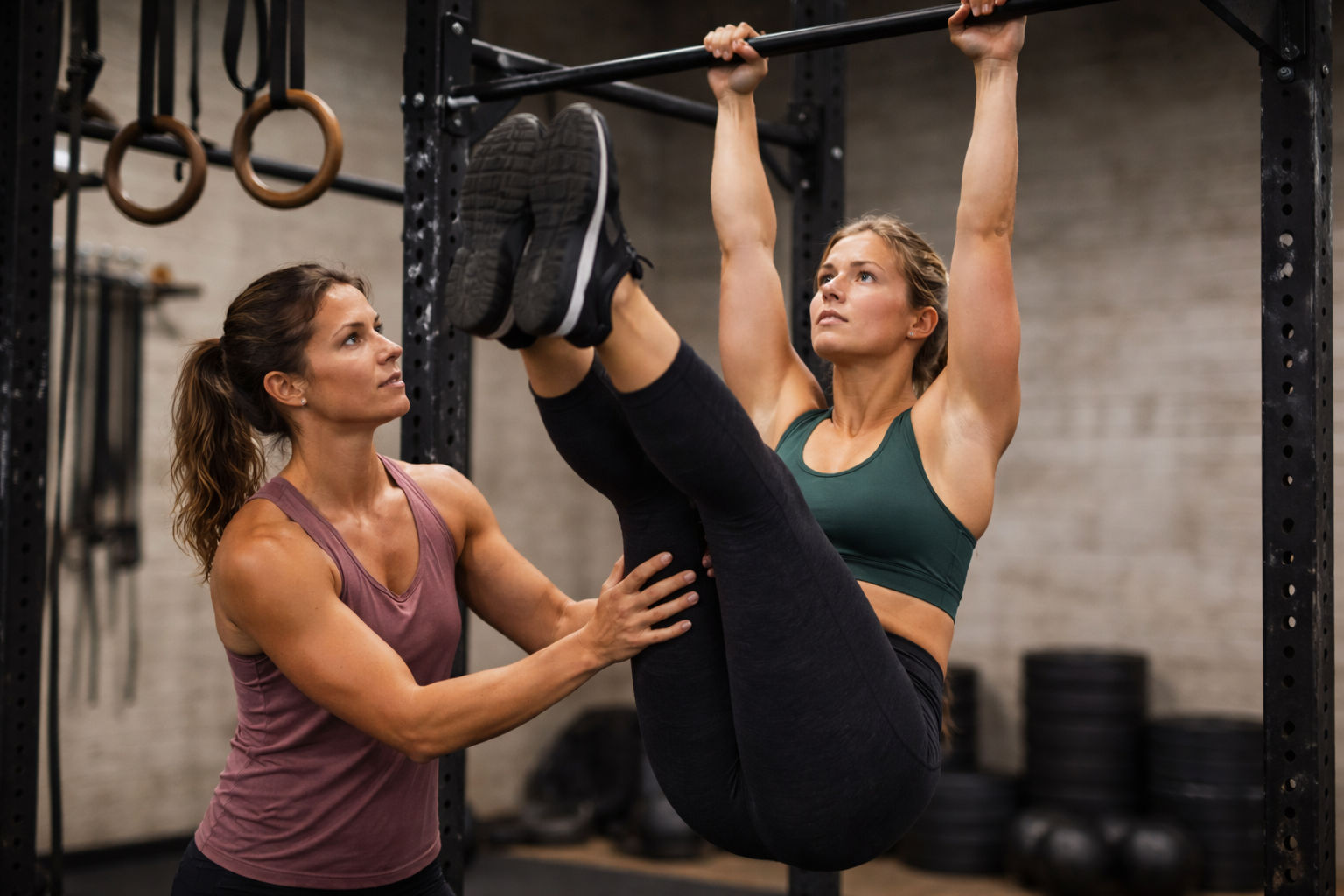
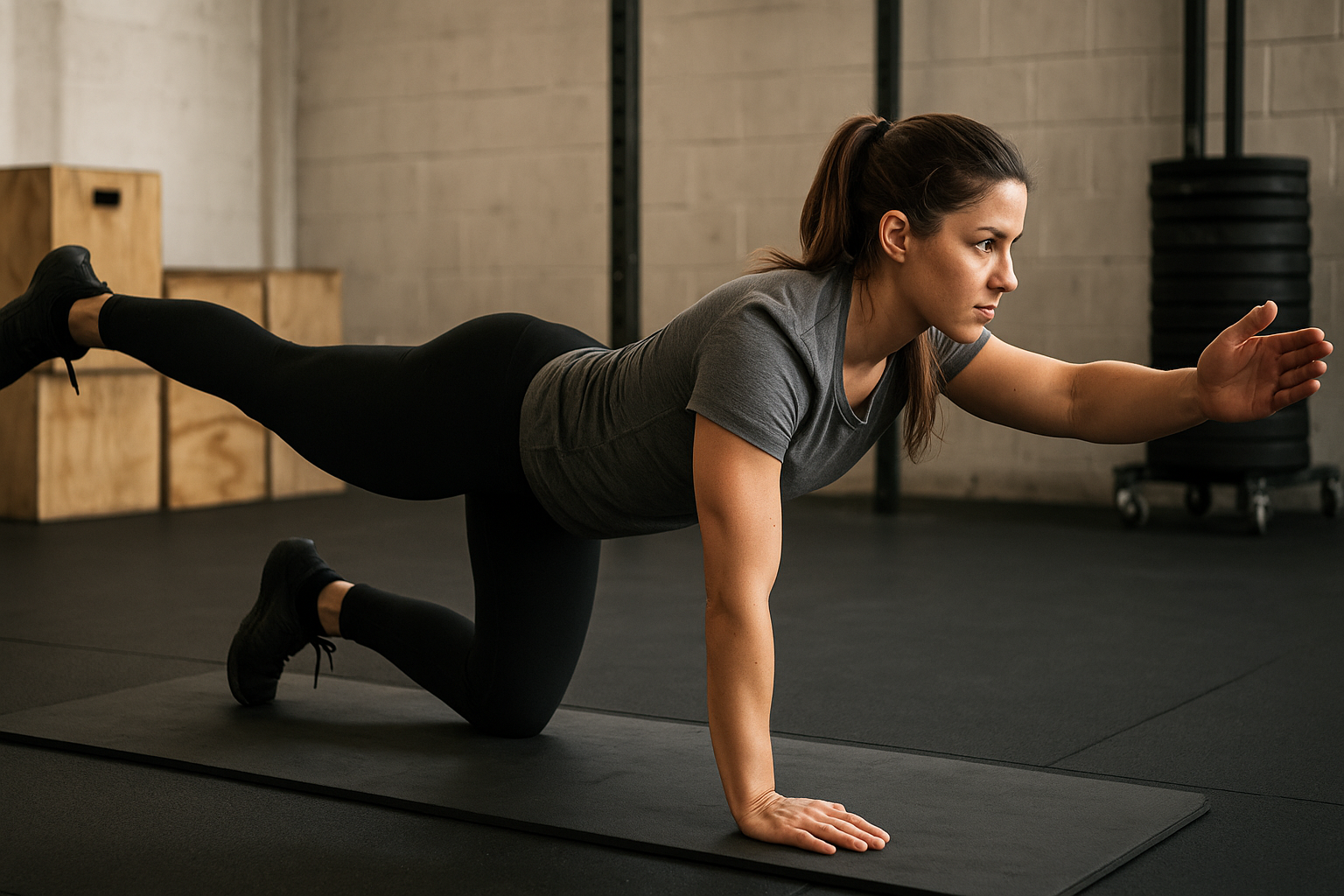
This is where the midline resists movement.
This is one of the most important and most overlooked qualities.
The ability to hold position under load determines how well you can express strength elsewhere.
The body must be able to:
Examples include:
This becomes increasingly important as intensity and complexity increase.
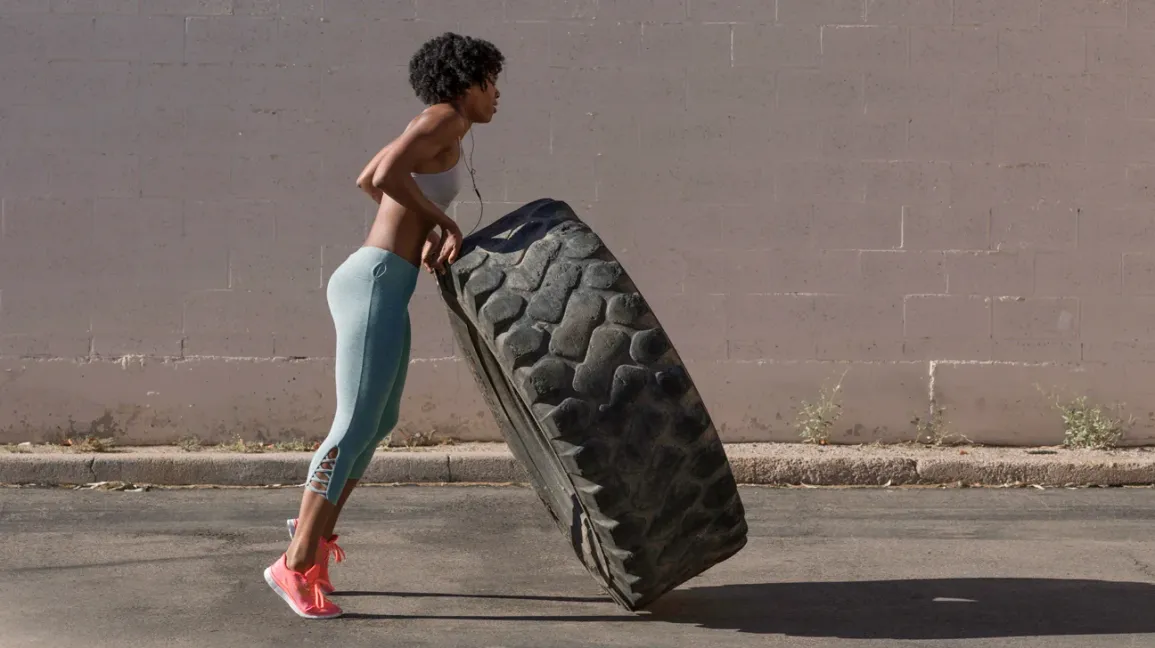
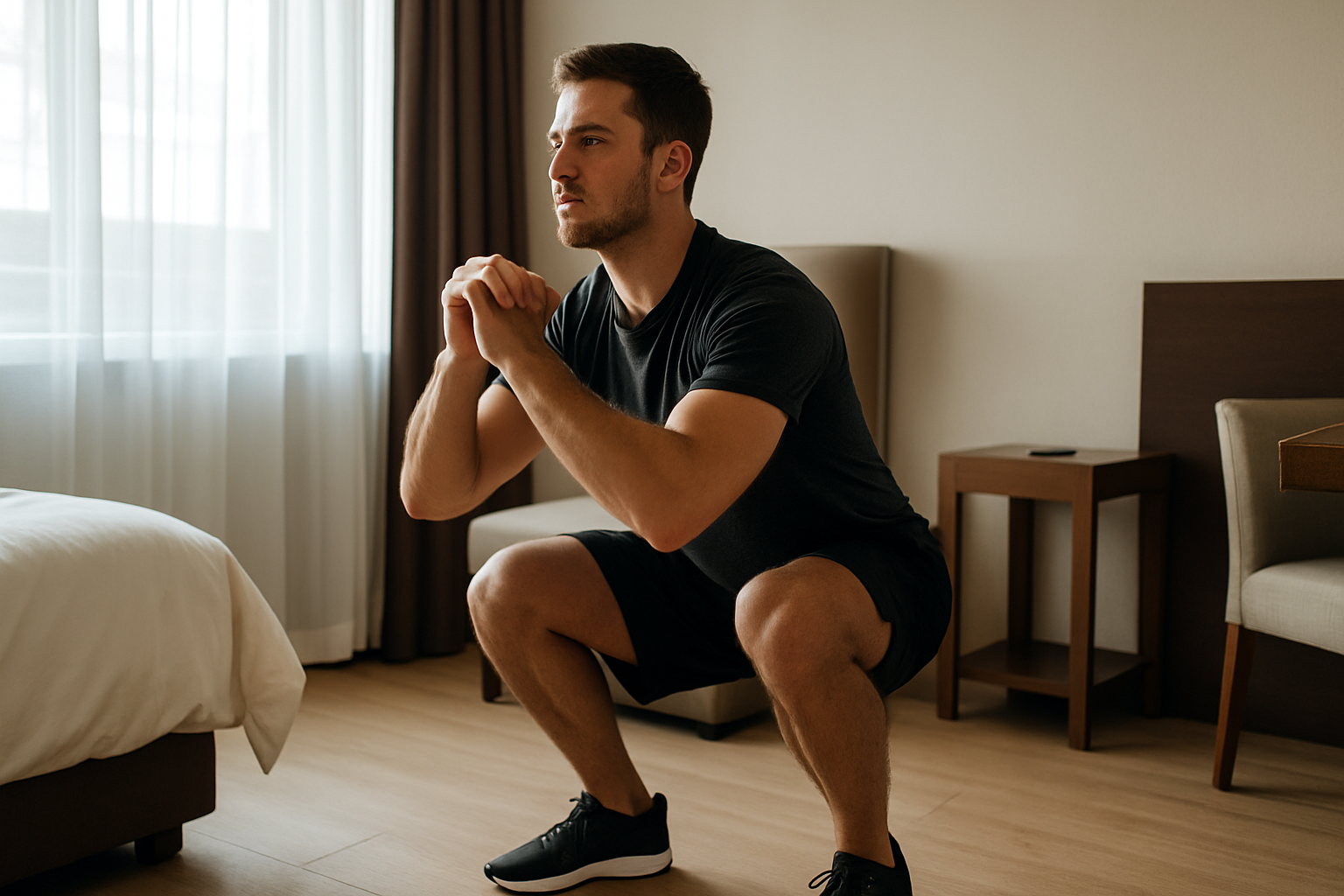
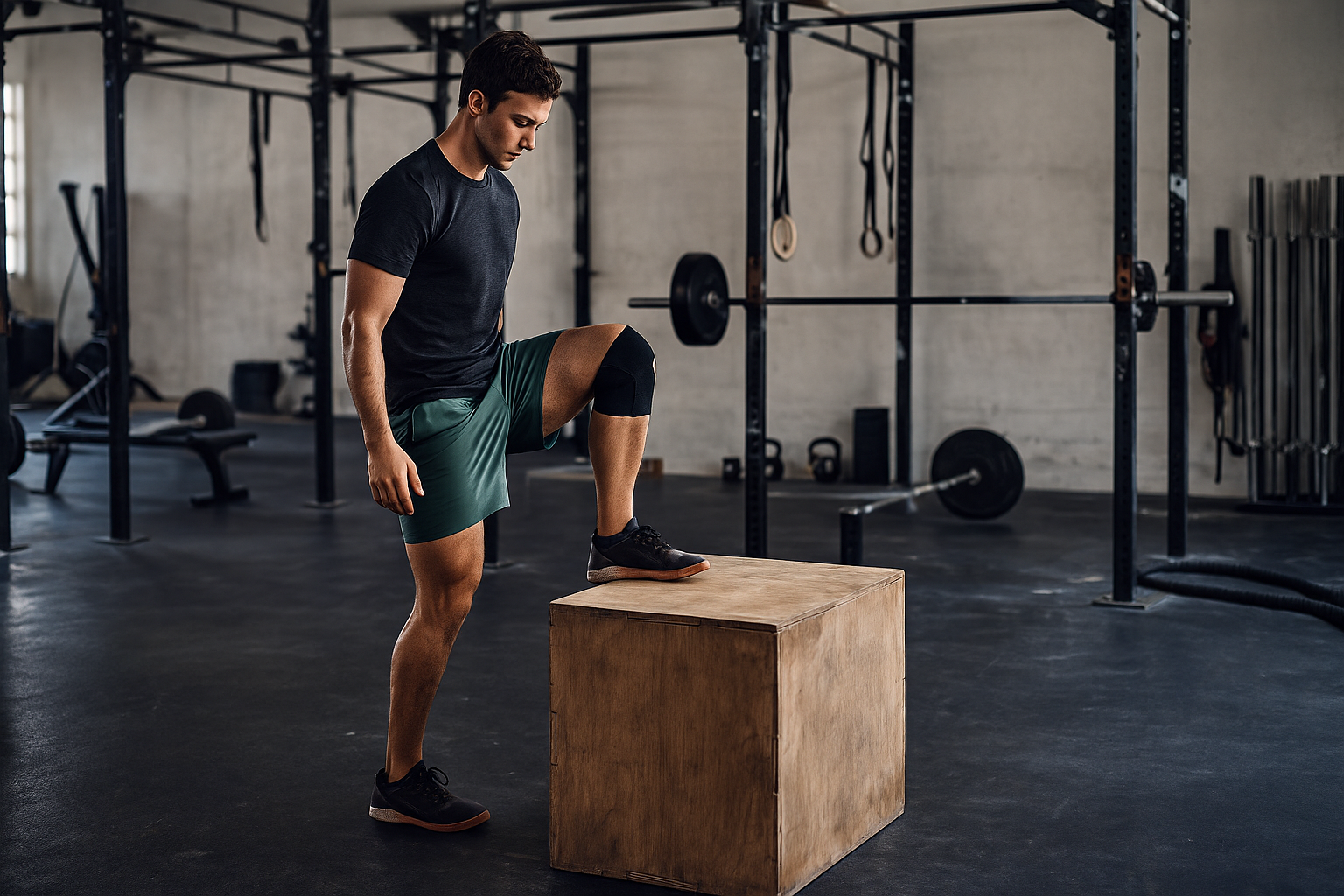
The lower body is responsible for the majority of force production.
But it does not do this in just one way.
This pattern emphasizes:
Slow / controlled:
Fast / explosive:
Both ends of the spectrum matter.
One builds strength.
The other expresses it.
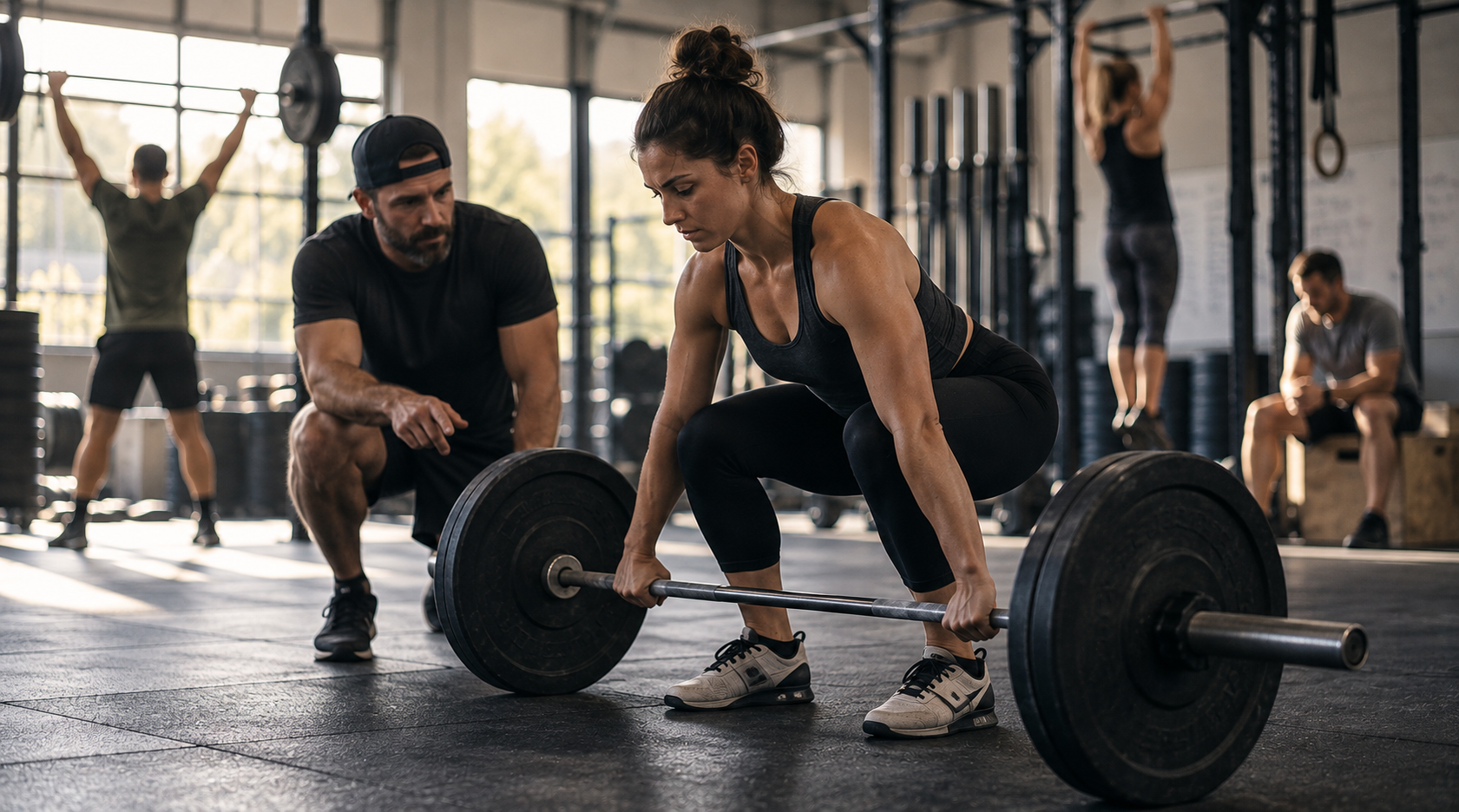
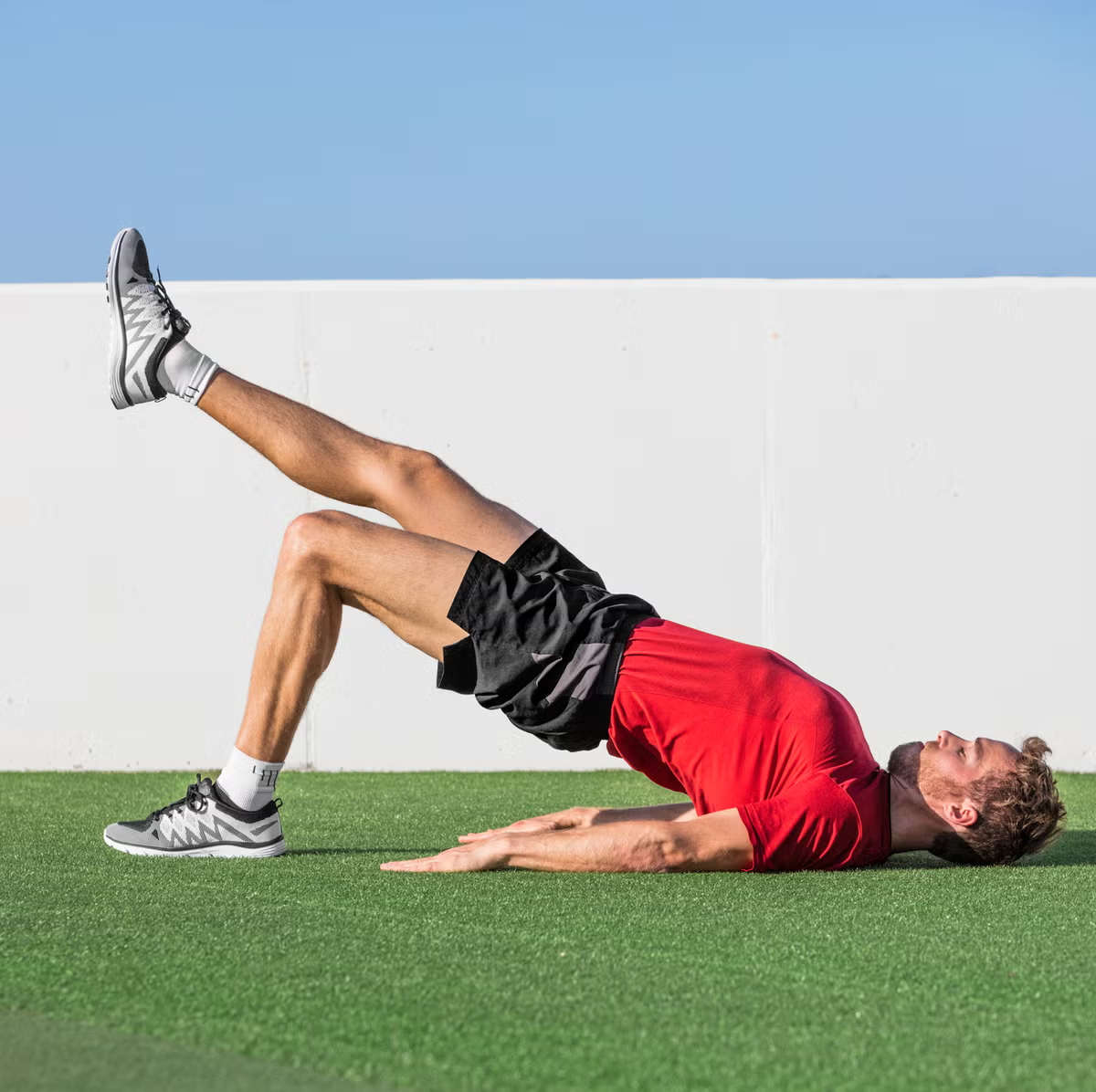
This is one of the most fundamental patterns.
It develops:
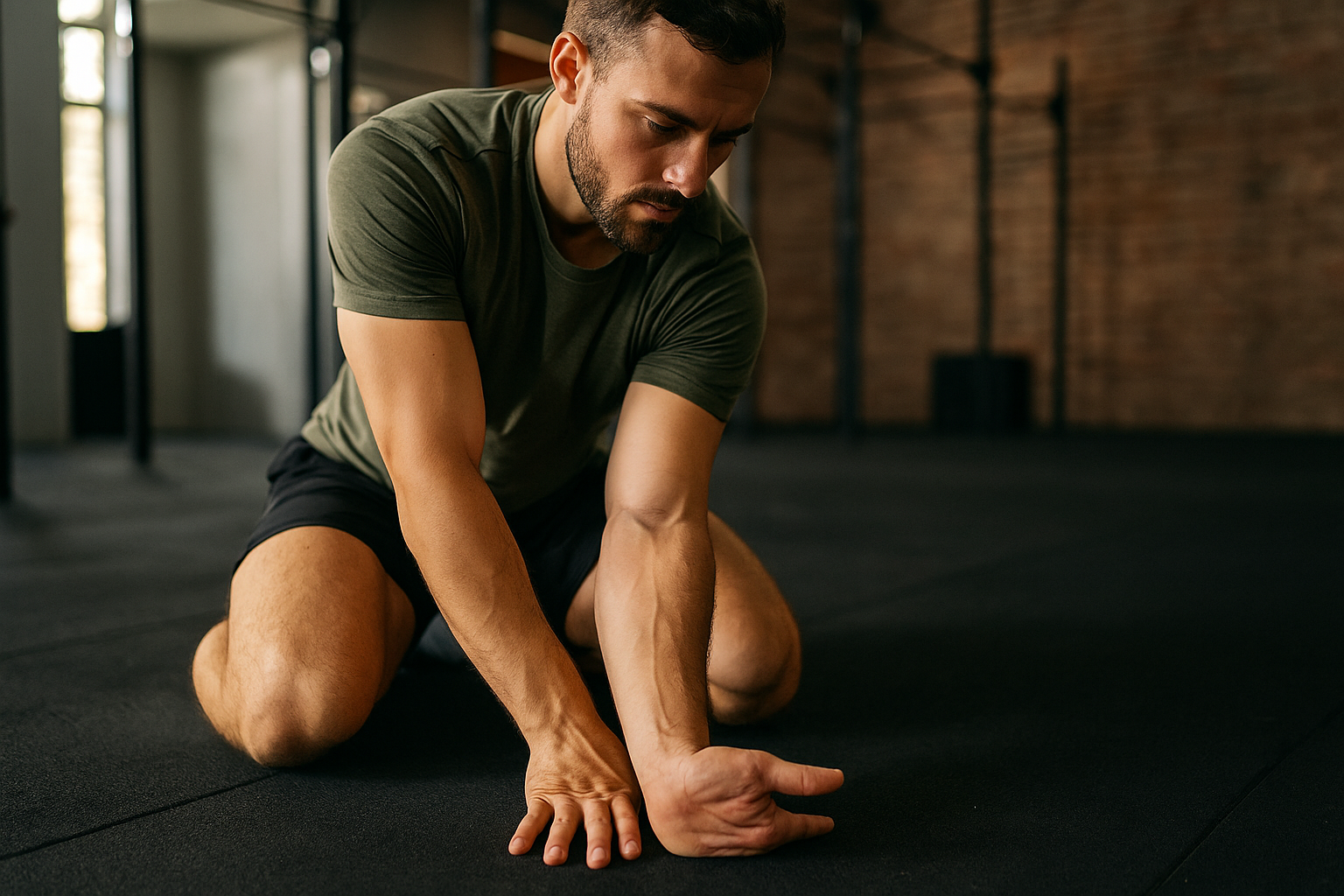
These movements address:
Examples:
These are essential for long-term joint health and performance.
Upper body movement is often divided into pushing and pulling, but direction matters.
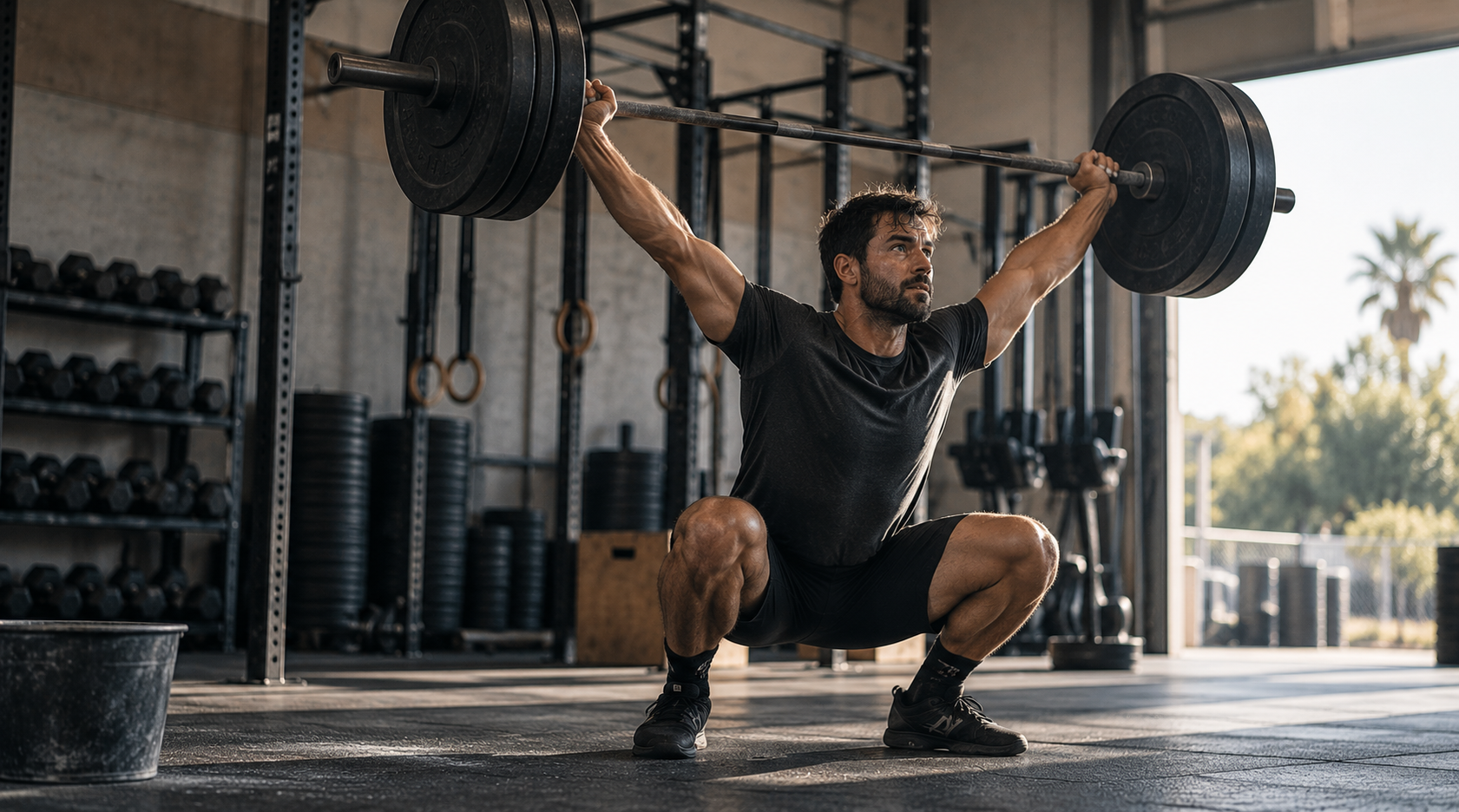
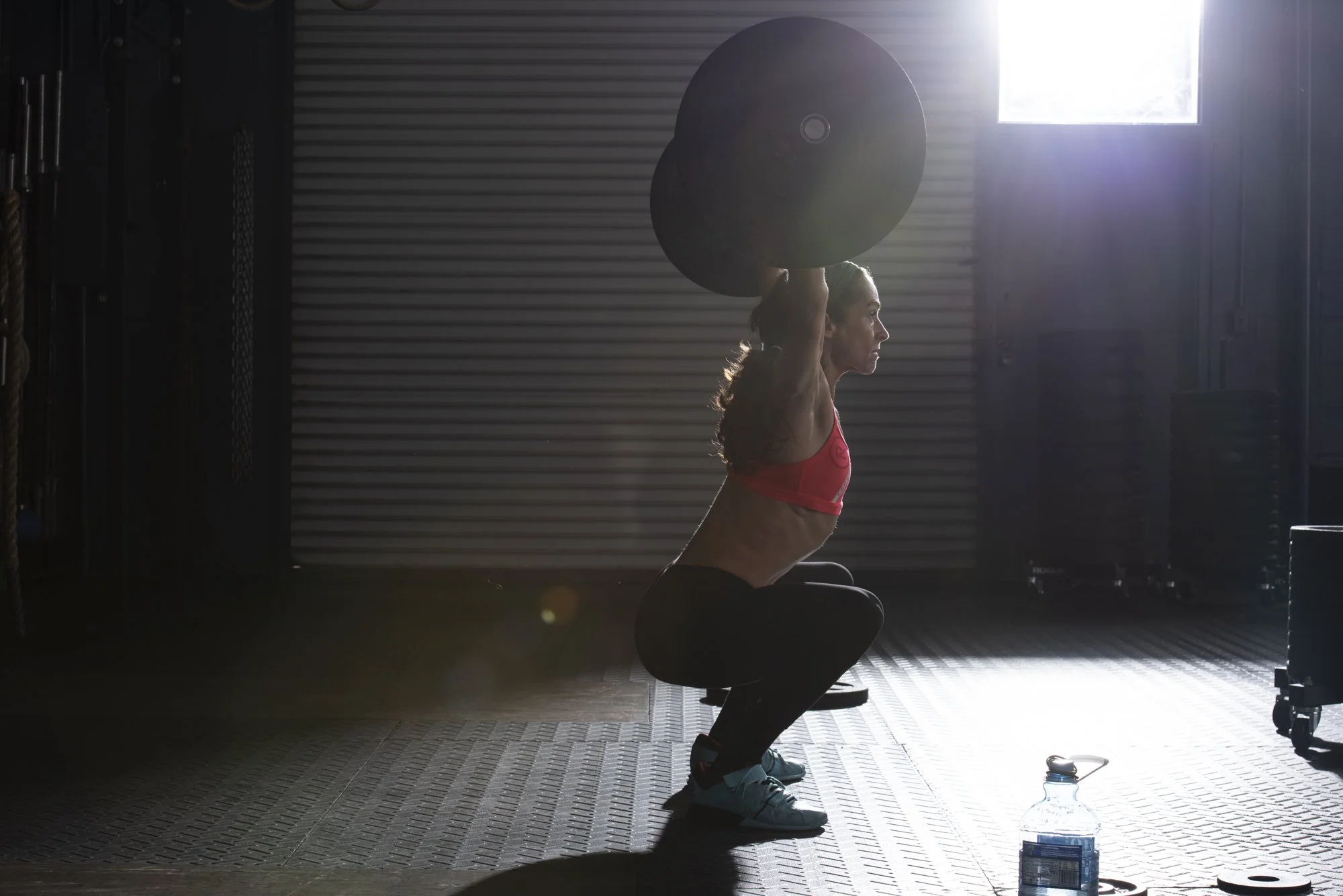
Vertical (Overhead):
Horizontal:
Vertical (Underhand / dip pattern):
Each variation emphasizes different muscle groups and joint angles.
Vertical (Overhead):
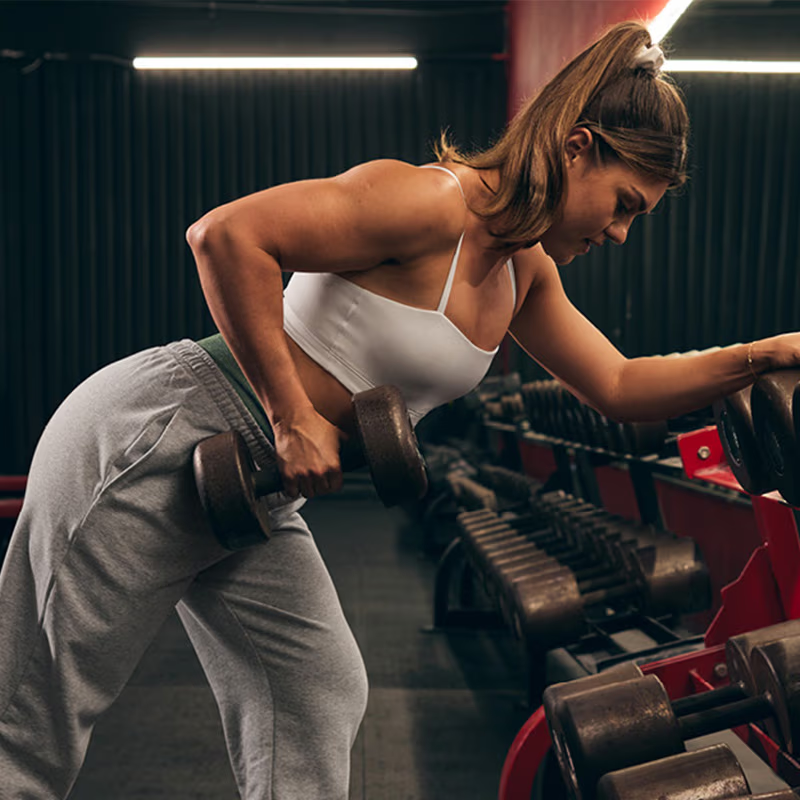
Horizontal:
Vertical (Underhand / high pull pattern):
Pulling strength is often underdeveloped relative to pushing, which is why it shows up so frequently.
A few additional patterns worth noting:
These combine:
These are essential for:
Often overlooked, but critical.
These train:
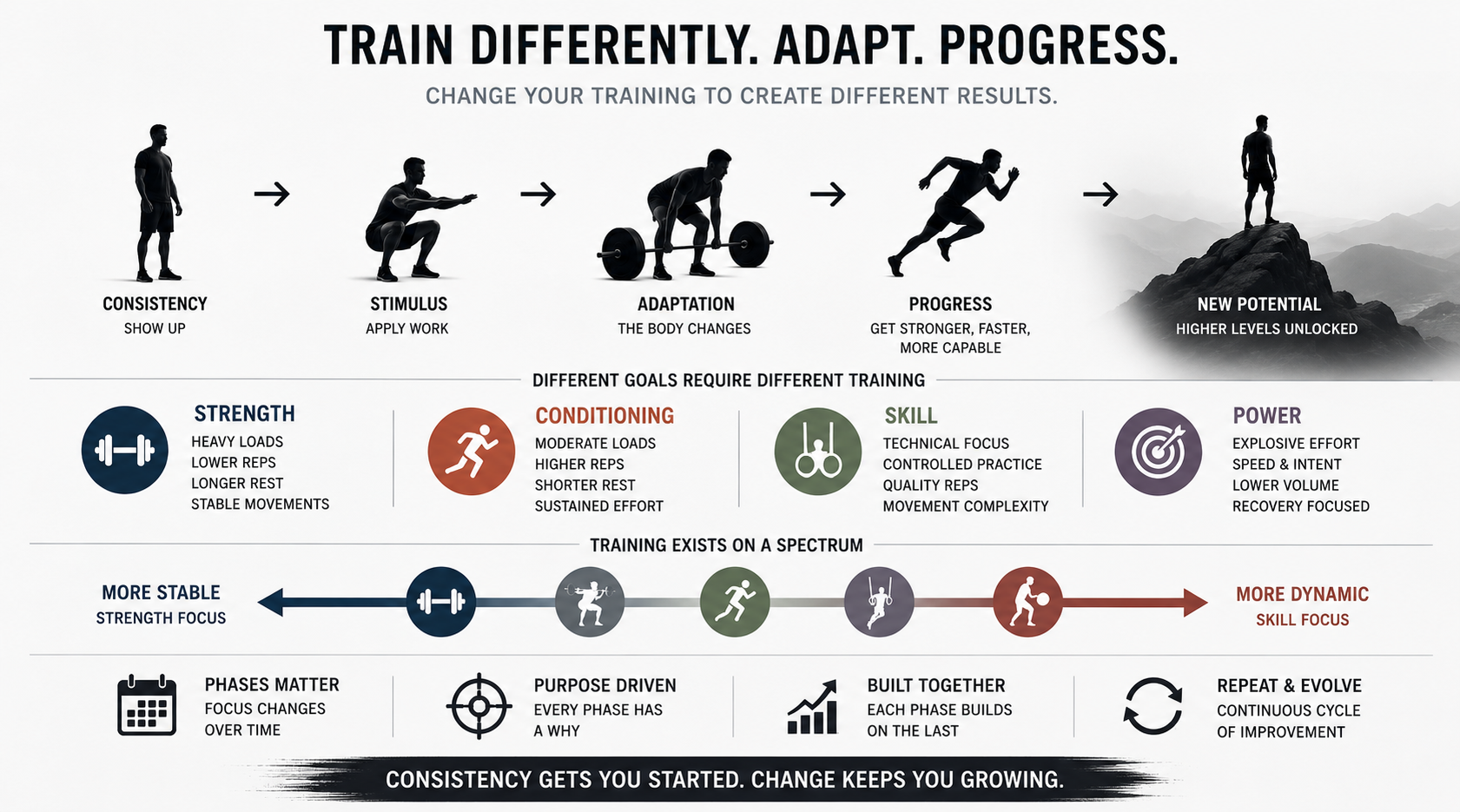
Not every workout will include every pattern.
That is not the goal.
The goal is that over time:
Some days emphasize strength.
Some emphasize control.
Some emphasize speed or coordination.
Together, they create a complete system.
Understanding movement patterns changes how you view training.
Instead of asking:
“What muscles did this workout hit?”
You begin to ask:
“What patterns am I developing?”
This leads to:
Training is not about doing more exercises.
It is about doing the right patterns consistently over time.
When all movement patterns are developed:
You do not get better by doing random movements.
You get better by consistently developing the patterns that matter.
That is what creates strength that lasts, performance that improves, and a body that holds up over time.