William Baier, MS, CSCS, USAW, CFL2
•
May 13, 2026
The Spectrum of Strength and Skill
Not all movements create the same type of adaptation.
Some exercises leave you feeling worked physically.
Others feel more demanding mentally and technically.
Both are important. But they are not doing the same thing.
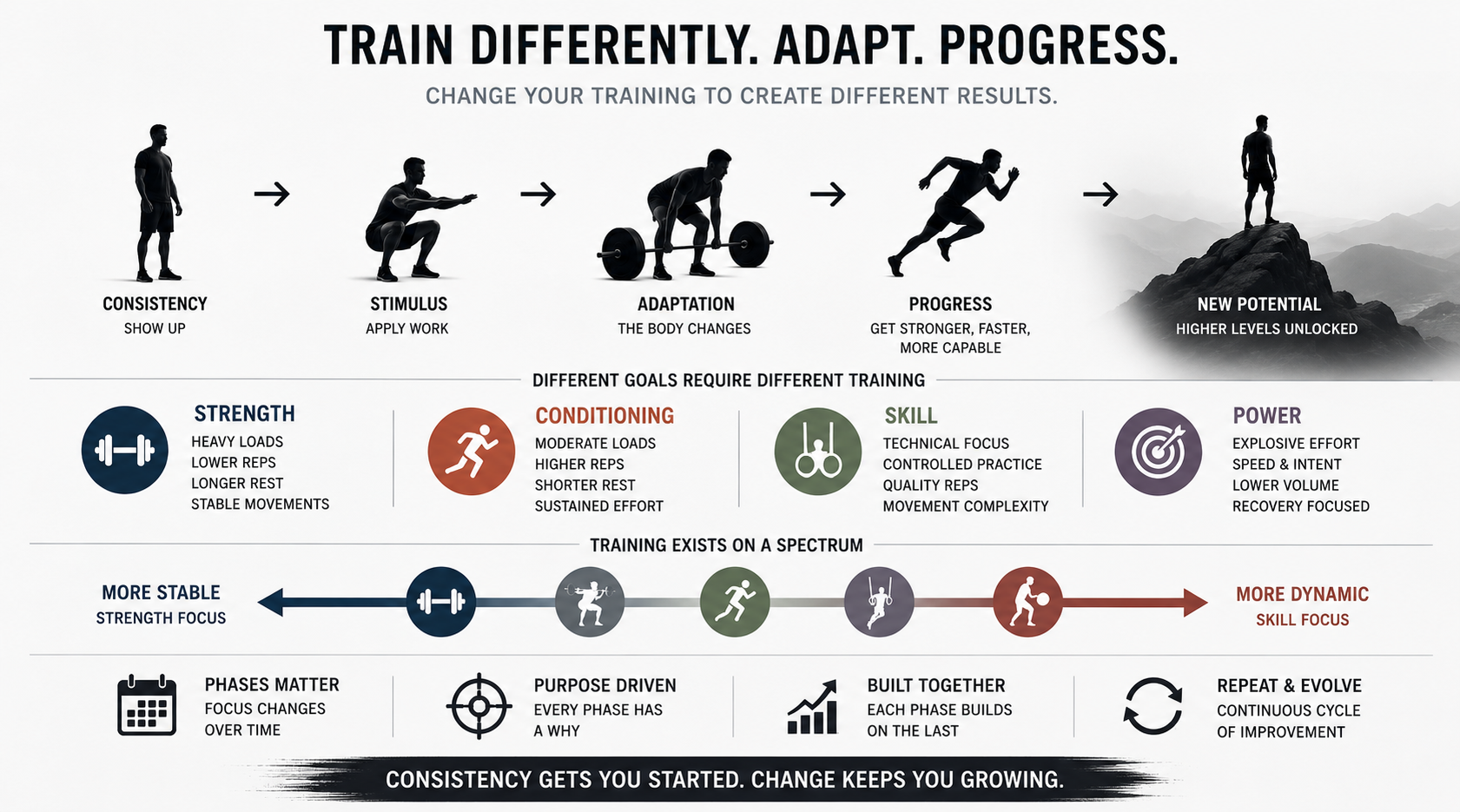
At a high level, movements exist on a spectrum.
On one end:
On the other:
Understanding where a movement falls on that spectrum helps explain what it is actually developing.
The Stable End: Strength and Hypertrophy
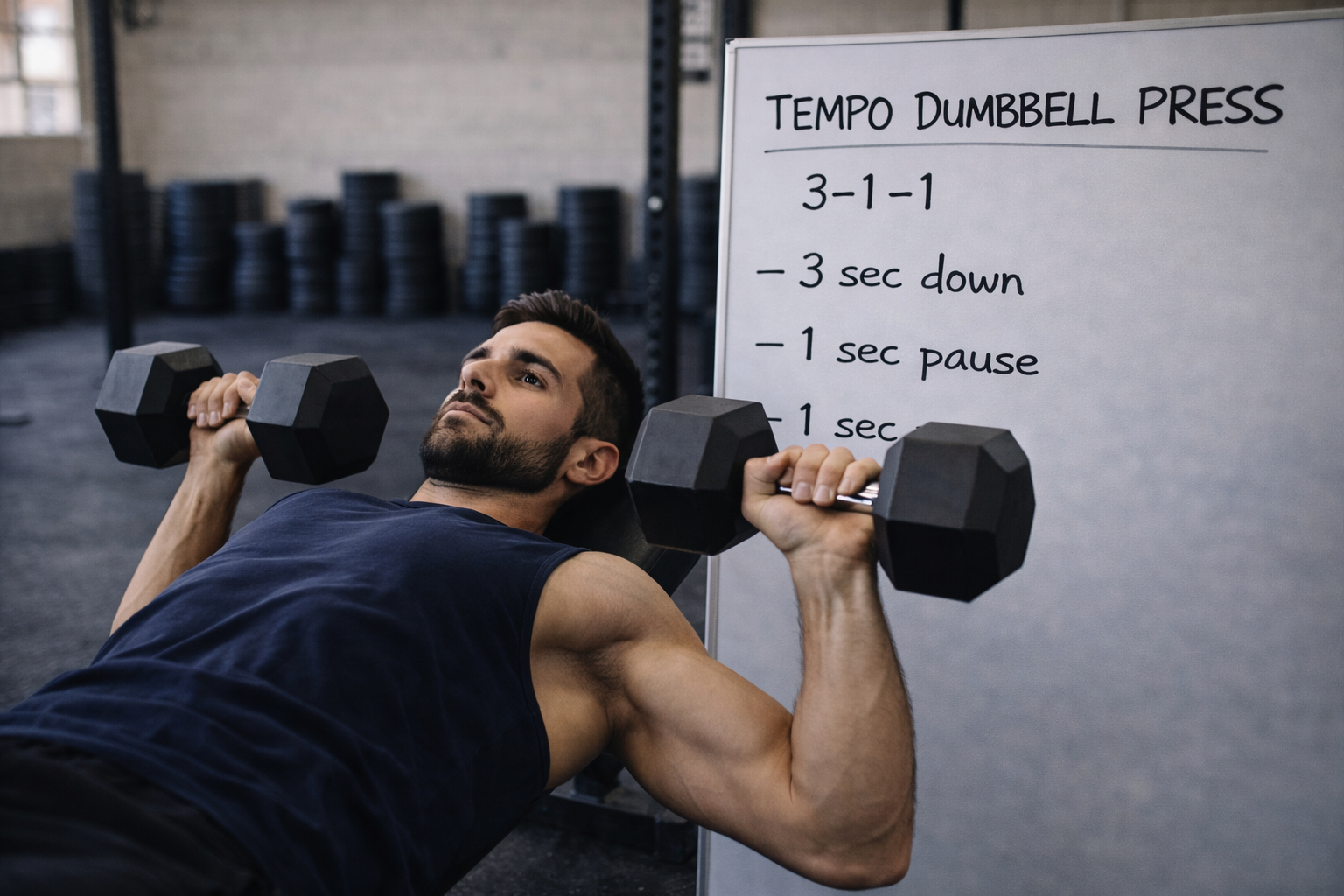
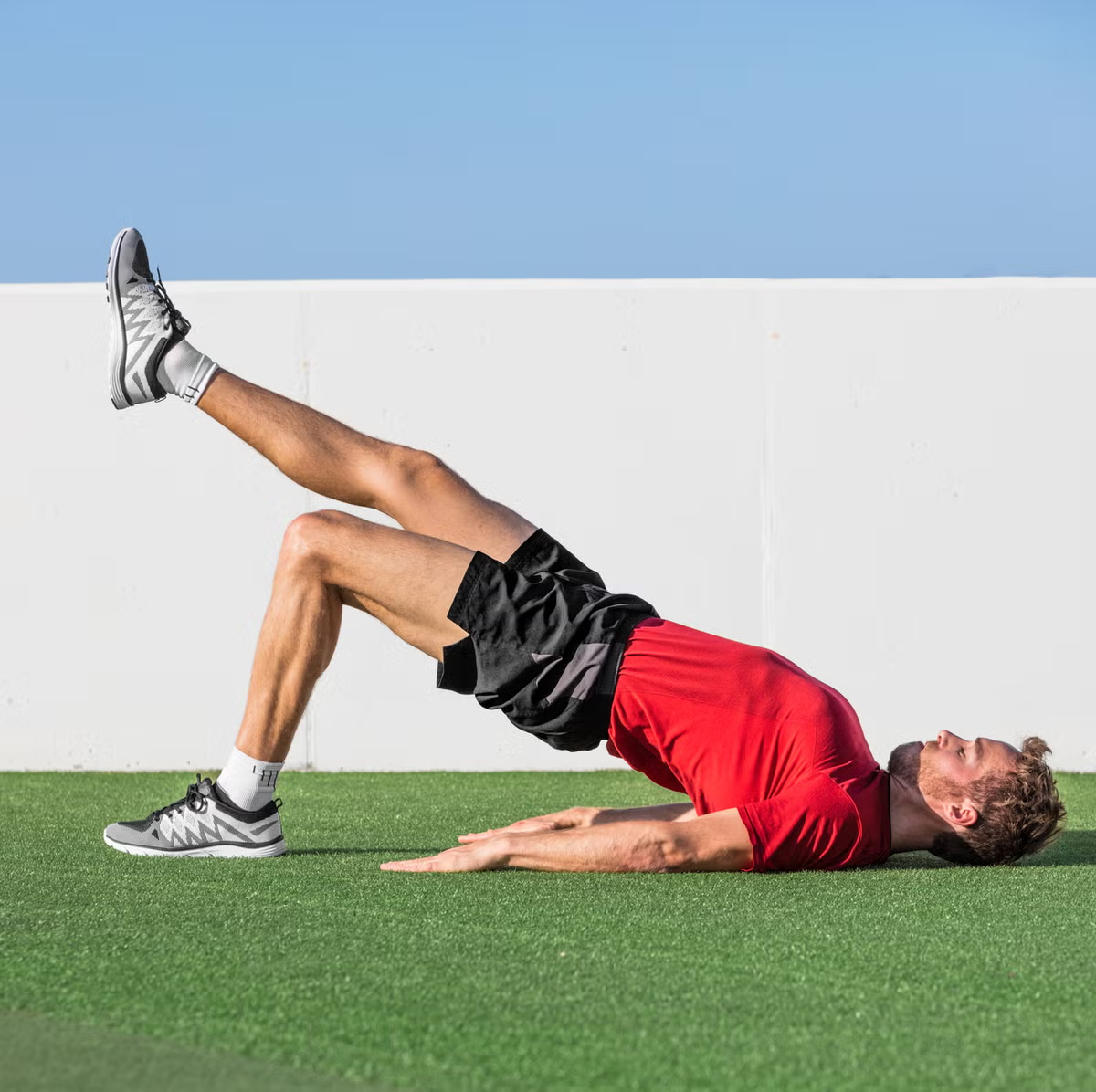
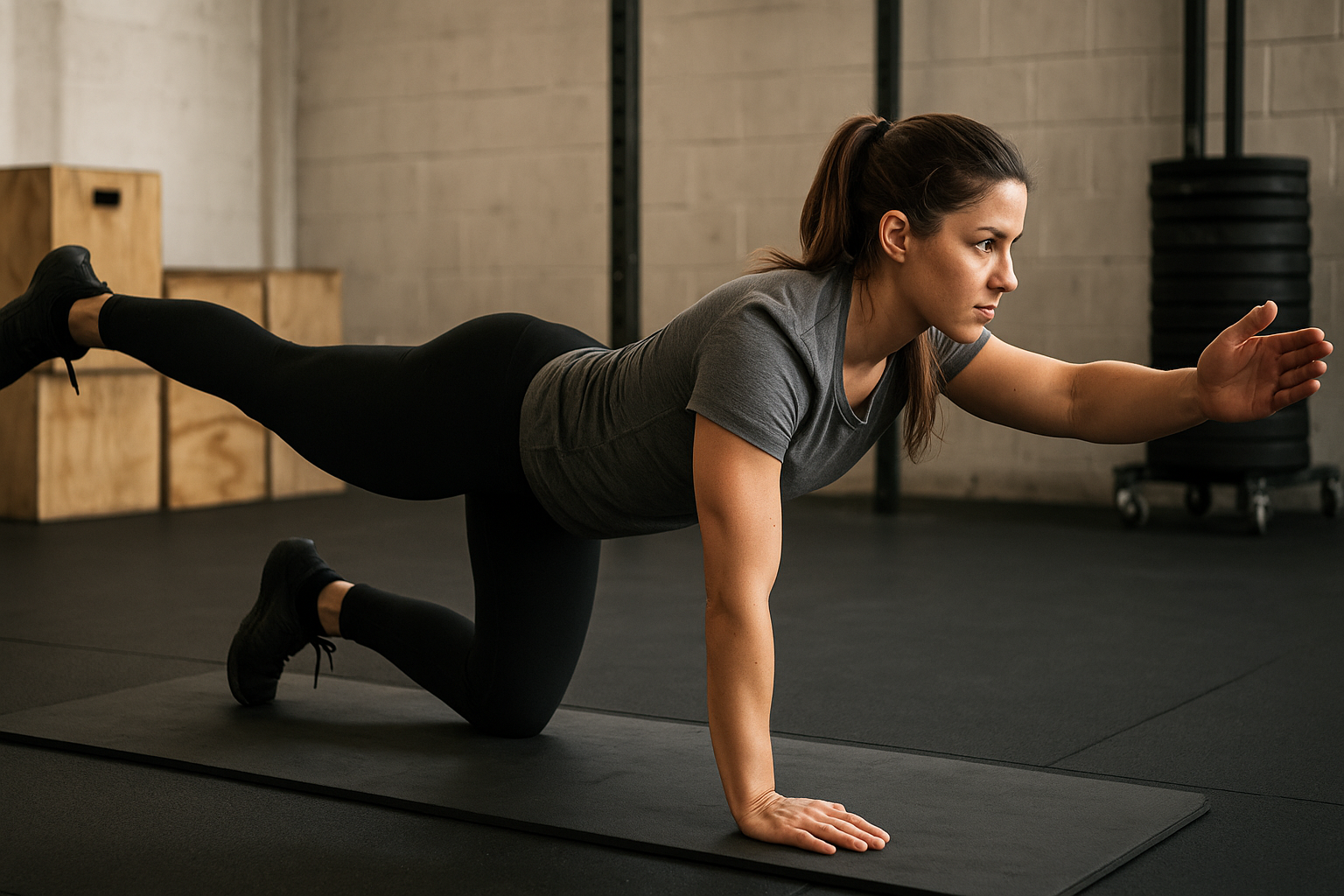
On the more stable, controlled side of the spectrum, the primary driver of adaptation is physical.
These movements are typically:
- More predictable
- Easier to control
- Easier to progressively load
Because of that, they are the best tools for:
- Building strength
- Developing muscle
- Creating structural adaptations
Examples
Think about movements like:
- Squats
- Deadlifts
- Presses
- Rows
These allow you to:
- Add load consistently
- Control tempo
- Focus on muscle recruitment
The limiting factor here is usually not coordination.
It is force production.
Why This Matters
If your goal is to:
- Get stronger
- Build muscle
- Improve resilience
You need time in this part of the spectrum.
This is where the body adapts physically.
The Dynamic End: Coordination and Skill
As movements become more complex and dynamic, the limiting factor shifts.
Now the challenge is not just producing force.
It is:
- Timing
- Coordination
- Efficiency
- Positioning
These movements place a greater demand on the nervous system.
Examples
Think about:
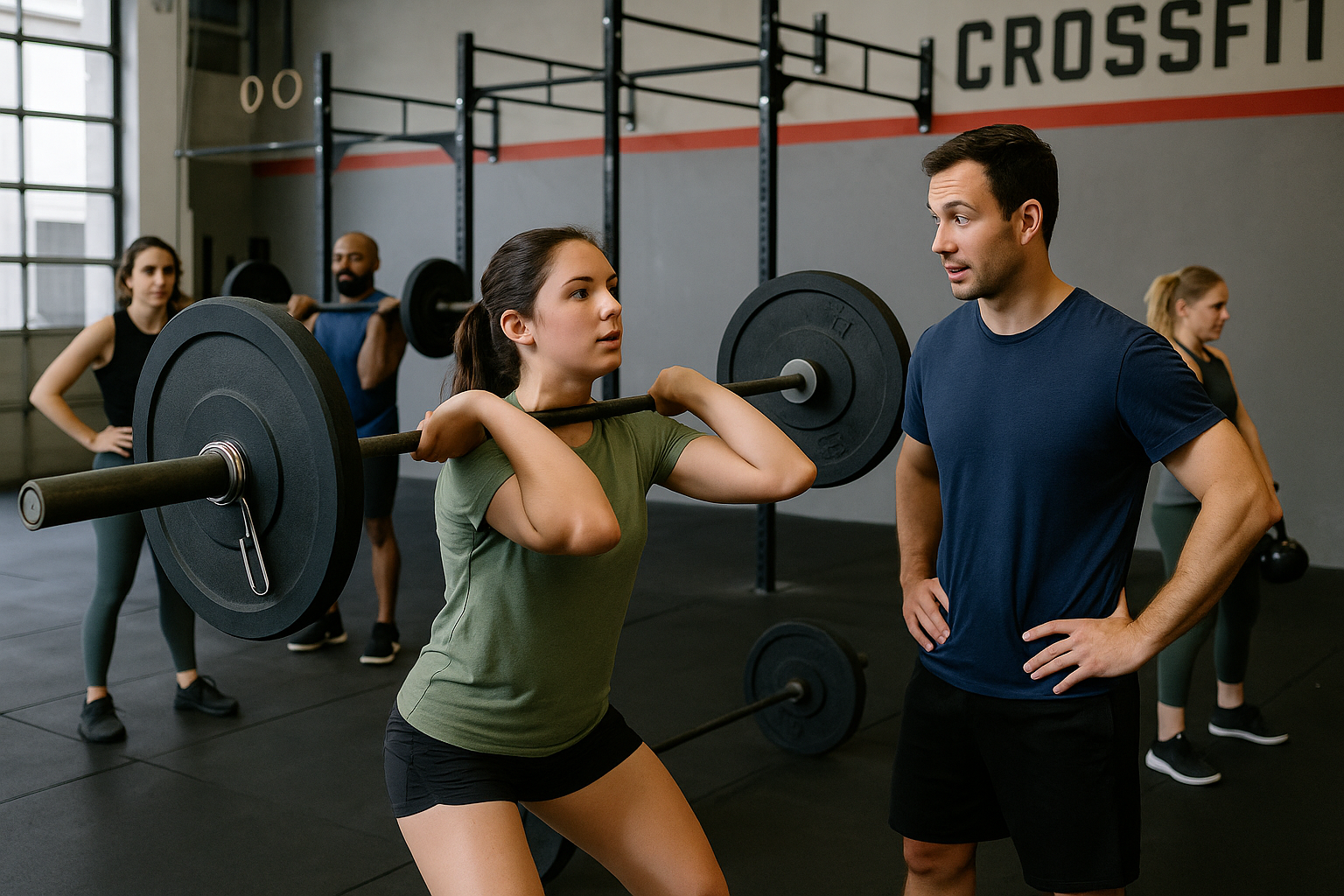
- Olympic lifts
- Barbell cycling
- Kipping gymnastics
- Complex mixed-modal workouts
These require:
- Sequencing
- Rhythm
- Precision under fatigue
The limiting factor here is not always strength.
It is execution.
What This Develops
These movements improve:
- Neuromuscular coordination
- Skill under fatigue
- Efficiency of movement
They teach your body how to apply strength.
Why You Cannot Skip Either
A common mistake is leaning too heavily toward one side.
If you only train stable, controlled movements:
- You build strength
- But struggle to apply it dynamically
If you only train complex, high-skill movements:
- You improve coordination
- But lack the strength to support it
Both are necessary.
But they must be developed in the right balance.
The Middle of the Spectrum
Most training falls somewhere in between.
Movements like:
- Moderate weight conditioning
- Controlled barbell cycling
- Simple gymnastics under fatigue
These blend:
- Strength
- Coordination
- Endurance
This is where a lot of CrossFit-style training lives.
But without the ends of the spectrum being developed, the middle becomes limited.
How This Connects to Our Programming
This is one of the key reasons our programming is structured the way it is.
At times, we intentionally bias toward:
- More stable, controlled work
This is where we build:
- Strength
- Muscle
- Structural integrity
At other times, we shift toward:
- More dynamic, technical work
This is where we develop:
Why We Separate These at Times
Trying to maximize both ends of the spectrum at the same time often leads to compromise.
Heavy fatigue limits skill development.
High complexity limits loading.
By separating focus:
- Strength improves more effectively
- Skill develops more cleanly
Then later, they can be combined.
What This Means for You
When a session feels:
- Slower
- More controlled
- Less complex
It is likely focused on building physical capacity.
When a session feels:
- Faster
- More technical
- More demanding mentally
It is likely focused on coordination and skill.
Both are productive.
They are just developing different qualities.
The Bigger Picture
Strength is the foundation.
Skill is the expression.
You need both to perform well.
Over time, the goal is to:
- Build strength on the stable end
- Develop skill on the dynamic end
- Bring them together in the middle
That is where performance lives.
Closing Thought
Not every movement is meant to feel the same.
Some are meant to build the engine.
Others are meant to teach you how to use it.
Understanding the difference changes how you train.
And that is what leads to better results over time.